










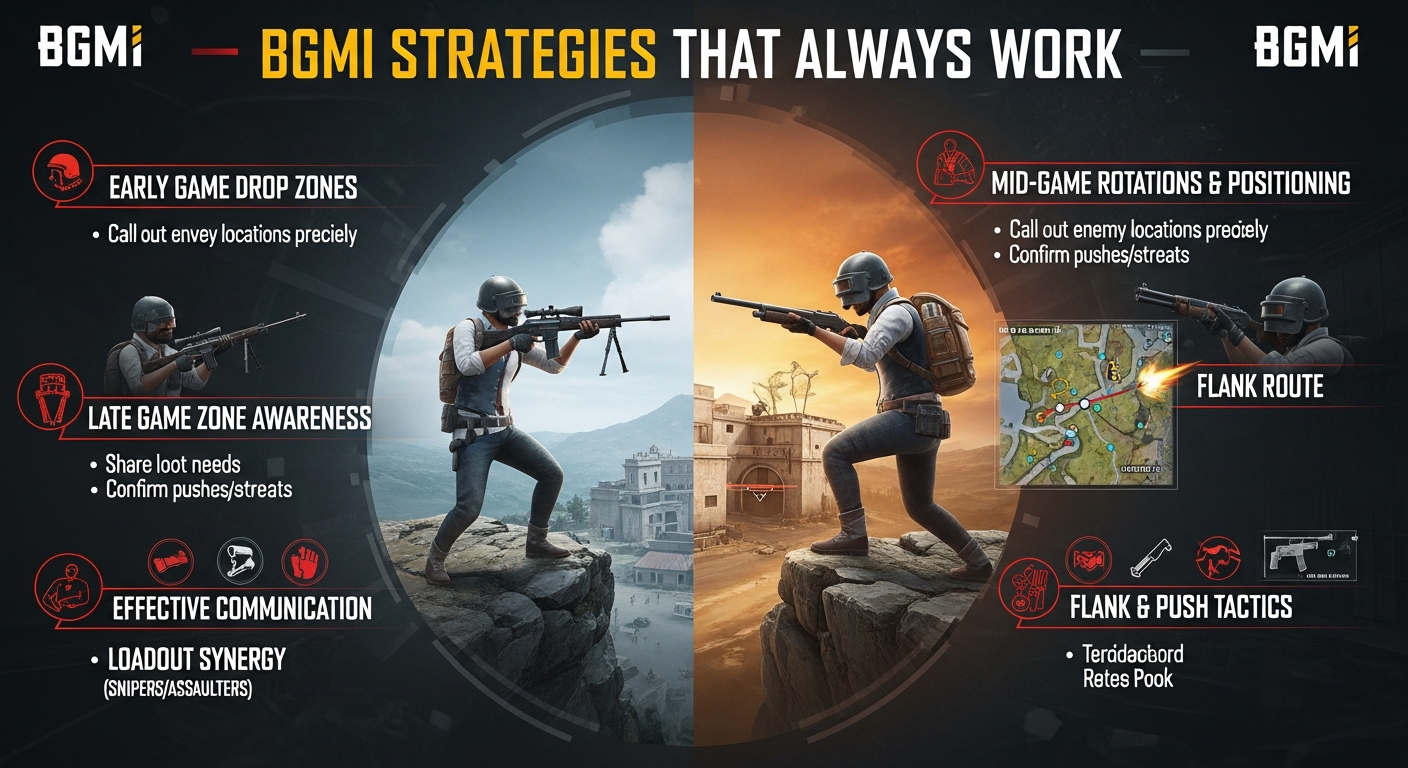
Okay, let's talk BGMI Duo strategies. Not just any strategies, the kind that actually win you games. I've got to admit, I've spent an embarrassing amount of time on this game. And while I'm no pro, I've learned a thing or two about what works... and what definitely doesn't.
See, most guides just give you generic advice. "Communicate!" "Stick together!" Yeah, no kidding. But how do you actually do that in the heat of the moment, when bullets are flying and your teammate is screaming about being flanked? That's what we're going to dive into.
Communication is Key, But How?
Everyone says communication is vital. And it is! But it's not just about calling out enemy positions. It's about developing a shorthand, a shared understanding with your duo partner. What does "pushing left" really mean to them? Is it a full-on aggressive rush, or a cautious advance to gain intel?
The frustrating thing about this is that it takes time. You can't just jump into a game with a random and expect to be perfectly in sync. Play several matches with the same person, experiment with different communication styles, and see what clicks. Maybe you use map markers, maybe you use specific callouts (“window, garage, behind blue”), maybe you use a combination of both. What works is what you and your teammate both understand instantly, without having to think. And speaking of communication, remember to check out these BGMI secret weapons; they might just give you the edge you need to communicate your dominance effectively!
Actually, that's not quite right. Communication is also about knowing when not to talk. Constant chatter can be distracting and drown out crucial sounds. Develop a system where you only speak up when you have important information to share, and keep it concise.
Looting Efficiently: The Unsung Hero
Looting. It's boring, right? But think about it this way: efficient looting is the foundation of a successful game. Wasting time rummaging through crates while your teammate is getting jumped is a recipe for disaster. So, how do you optimize?
Designate roles. One person focuses on meds and throwables, the other on ammo and attachments. This way, you're not both fighting over the same resources. And don't be afraid to drop things for your teammate if they're in need. Teamwork, remember?
But here's the thing: don't be too greedy. I see so many players obsessively looting every single building, even when the zone is closing in. Sometimes, it's better to cut your losses and move on. A mediocre loadout in a good position is better than a decked-out loadout in the blue zone. The zone is closing in? Maybe it's time to hop into one of the top Roblox games like Brookhaven and relax a bit after all the intense looting.
Strategic Positioning and Movement
Positioning is everything. And I mean everything. You can have the best aim in the world, but if you're constantly caught out in the open, you're going to get melted. So, how do you improve your positioning?
First, learn the map. Not just the layout, but the flow. Where do people typically rotate? Where are the chokepoints? Where are the good camping spots? Knowing this will allow you to anticipate enemy movements and position yourself accordingly.
Second, use cover. Obvious, right? But so many players underestimate the importance of good cover. Don't just stand out in the open and trade shots. Use trees, rocks, buildings, anything to protect yourself. And don't be afraid to reposition if your cover is compromised.
Third, think about your angles. Don't stand shoulder-to-shoulder with your teammate. Spread out slightly to create crossfires and make it harder for the enemy to focus their fire. And be aware of your surroundings. Are you vulnerable to flanks? Are you providing cover for your teammate?
And finally, adapt to the situation. What works in one game might not work in another. Be willing to change your strategy based on the map, the zone, and the enemy's behavior.
I initially thought positioning was all about finding the perfect spot and camping. But after looking deeper, I realized it's more about dynamic adaptation. It's a constant dance between offense and defense, between aggression and caution.
FAQ: Mastering BGMI Duo Strategies
How do I choose the right teammate for Duo mode?
Compatibility is key! Look for someone with a similar play style and communication preferences. Do you both prefer aggressive pushes or more cautious rotations? Can you communicate effectively under pressure? It's also helpful to find someone who complements your strengths. If you're a good sniper, find someone who excels in close-quarters combat. Ultimately, the best teammate is someone you enjoy playing with and who makes you a better player.
Why are we losing so many close-range fights?
Close-range combat in BGMI is chaotic, but there are ways to improve your odds. First, practice your aim and movement. Learn to strafe, pre-aim corners, and use cover effectively. Second, coordinate your attacks with your teammate. Don't just rush in blindly. Flank the enemy, use grenades to flush them out, and communicate your intentions clearly. The frustrating thing about close-range fights is how quickly they can turn. A single mistake can be fatal. But with practice and coordination, you can turn the tables on your opponents.
How can effective BGMI duo strategies help us win more consistently?
Think of it like this: a well-oiled machine. Each player understands their role, anticipates their partner's movements, and executes their tasks flawlessly. Effective strategies minimize mistakes, maximize efficiency, and create opportunities for success. By focusing on communication, looting, positioning, and teamwork, you and your duo partner can elevate your game to the next level and start racking up those chicken dinners.
Is it ever okay to split up in Duo mode?
Generally, sticking together is the best approach in Duo mode. However, there are situations where splitting up might be advantageous. For example, if you need to loot a large area quickly, or if you want to flank the enemy from different angles. But be careful! Splitting up can leave you vulnerable and make it harder to support each other. Only split up if you have a clear plan and can communicate effectively. And always be prepared to regroup quickly if things go south.






![Peggle [FLASH] Game](https://gamerewardz.com/thumbs/peggle-flash-game_2.webp)