




















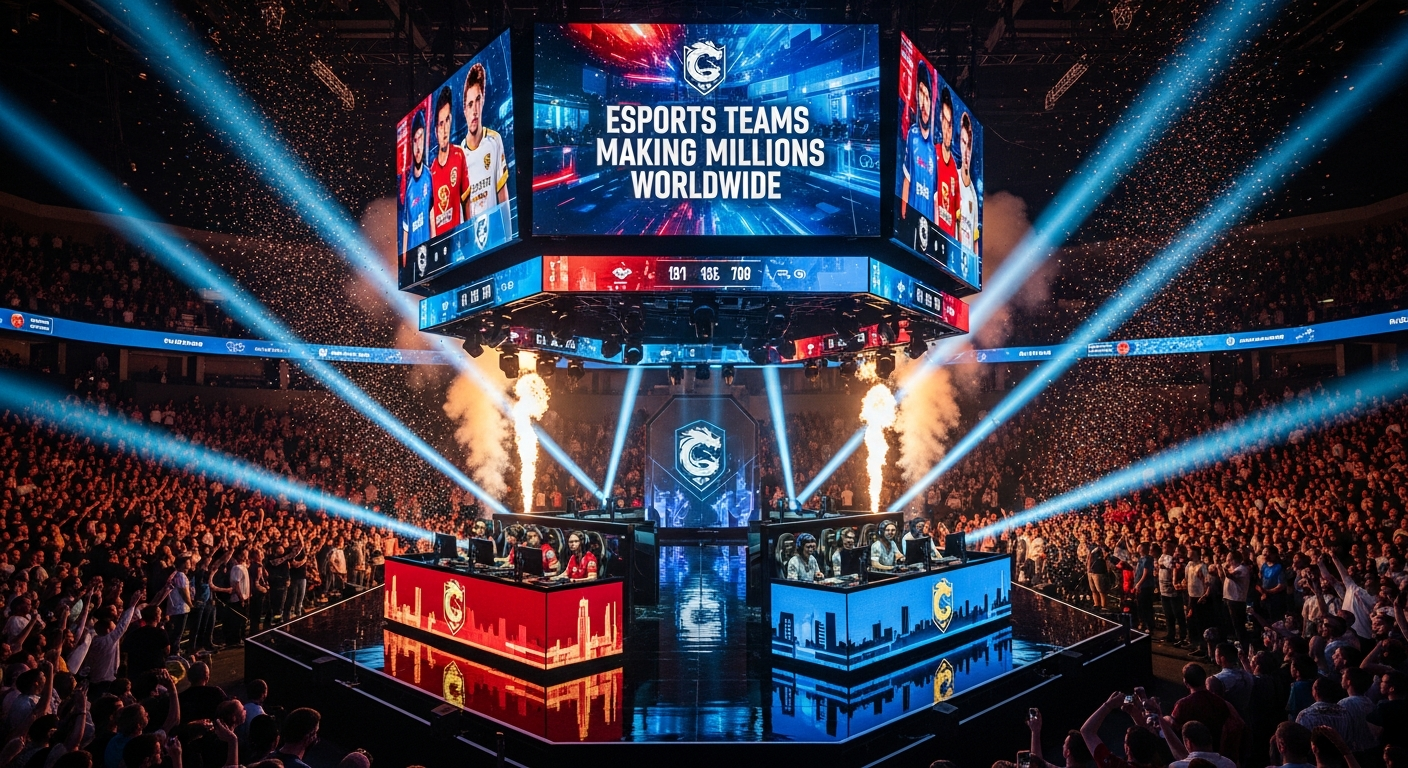
Esports. Even the word sounds futuristic, doesn't it? Like something straight out of a cyberpunk novel. But here’s the thing: it’s not the future anymore. It's now. And it’s huge. We're talking stadiums filled with screaming fans, millions watching online, and, yes, global esports teams generating millions in revenue. It’s mind-boggling, really. I mean, who would have thought that playing video games could turn into such a lucrative profession? But let's dive in, shall we?
The Rise of Esports Giants
So, how did we get here? Well, it wasn’t an overnight success, that’s for sure. The seeds of esports were sown way back in the arcade era, with high score competitions on games like Space Invaders and Pac-Man. But the real explosion happened with the advent of the internet and online multiplayer gaming. Games like Counter-Strike, StarCraft, and League of Legends built massive online communities. These communities spawned competitive leagues, which in turn attracted sponsorship and investment. Think of it like this: it was a perfect storm of technological advancement, passionate gamers, and savvy business minds. And the money? Well, the money followed the eyeballs. Esports team valuations have skyrocketed.
But it's not just about the games themselves, is it? It's about the players. These aren't just some kids in their basements. Okay, some of them might have started that way. But the pros? They're athletes, in every sense of the word. They train rigorously, practice for hours every day, and have to maintain peak physical and mental condition. The level of skill, strategy, and teamwork on display in top-tier esports competitions is genuinely awe-inspiring. It's like watching a chess match played at a million miles an hour.
Franchising and Investment in the Esports Scene
One of the biggest game-changers in recent years has been the adoption of franchise models, similar to those used in traditional sports leagues. This provides stability and long-term investment opportunities for esports teams. Think of franchises like the Overwatch League or the League of Legends Championship Series. Teams pay hefty sums for these slots, but they get a guaranteed spot in the league, a share of the revenue, and the ability to build a brand around their team and players. This influx of capital has allowed teams to invest in better training facilities, coaching staff, and marketing, further professionalizing the scene.
And speaking of money, where does it all come from? Well, there are multiple revenue streams. Sponsorships, of course, are a big one. Brands are clamoring to get their logos on jerseys and their products featured in streams. Then there’s advertising revenue from online broadcasts, ticket sales for live events, and merchandise. Powerful Weapons in PUBG Mobile Also, don't forget about in-game purchases and subscriptions. It all adds up to a multi-billion dollar industry. The scale of this is truly breathtaking.
The Future of Esports: What's Next?
So, what does the future hold for esports? Well, I think we're only scratching the surface, to be honest. I mean, consider the potential for virtual reality esports, or the integration of esports into mainstream sports broadcasting. Imagine watching an NFL game with a live esports overlay showing real-time win probabilities calculated by AI based on player performance. The possibilities are endless!
Actually, that’s not quite right. Let me try to explain this more clearly... One thing I think we will see more of is greater regulation and standardization. As esports grows, there will be a need for more oversight to ensure fair play, protect players' rights, and combat issues like match-fixing and doping. And that's not a bad thing; it will ultimately legitimize the industry and make it more attractive to investors and sponsors. We might also see more traditional sports organizations getting involved, either by acquiring existing esports teams or starting their own. After all, they have the infrastructure, the marketing expertise, and the deep pockets to make a big impact.
But—and this is a big but—esports needs to be careful not to lose its soul in the process. What makes esports special is its grassroots origins, its passionate community, and its rebellious spirit. As it becomes more corporatized, it's important to preserve those values. COD Mobile: Powerful Weapons It needs to remain a sport for the players, by the players, and about the players.
Challenges and Controversies in Esports
Now, it's not all sunshine and rainbows in the world of esports. There are challenges and controversies, just like in any other competitive arena. One of the biggest is the issue of player burnout. The demands of professional esports are incredibly intense, and many players suffer from stress, anxiety, and even physical injuries. There’s also the issue of age. Most esports pros retire in their mid-20s, simply because their reflexes and reaction times start to decline. This raises questions about career longevity and what happens to players after their competitive days are over. I've got to admit, this part fascinates me—the incredibly short lifespan of a pro gamer.
And then there are the controversies surrounding game developers. Because they own the games, they have a huge amount of power over the esports ecosystem. They can change the rules, introduce new content, or even shut down a game entirely, potentially destroying the careers of thousands of players overnight. This creates a precarious situation, where the future of esports teams and leagues is often at the mercy of a single company. It's a tricky balance between innovation and stability, and it's something that the esports community is constantly grappling with.
FAQ: Your Burning Esports Questions Answered
How do I know if I have what it takes to be a pro esports player?
That’s the million-dollar question, isn't it? There's no magic formula, but there are a few key indicators. First, you need to be incredibly skilled at a specific game. Not just good, but exceptional. You should be able to consistently outperform other players, even under pressure. Second, you need to have a strong work ethic and be willing to put in the hours of practice required to stay at the top. Third, you need to be a good teammate and be able to communicate effectively with others. And finally, you need to have the mental fortitude to handle the ups and downs of competitive gaming. Rejection happens. Tournaments get lost. Bad days come. Can you pick yourself up and keep going? If you tick all those boxes, then you might just have what it takes.
Why are some esports games more popular than others?
Good question! There are several factors at play. Some games are simply more accessible and easier to learn than others. Games like Fortnite and Valorant have a relatively low barrier to entry, which makes them popular with casual players. Other games, like League of Legends and Dota 2, have a steeper learning curve but offer more depth and complexity, which appeals to more hardcore gamers. Also, don’t underestimate the role of marketing and promotion. Game developers who invest heavily in promoting their games and sponsoring esports events are more likely to attract a large audience. The game's watchability is also a huge factor.
Are esports athletes really athletes?
This is a debate that rages on, and honestly, I'm not sure there's a definitive answer. On the one hand, esports athletes don't have the same level of physical exertion as traditional athletes. They're not running marathons or lifting weights. But on the other hand, they require incredible hand-eye coordination, reaction time, and mental stamina. They also face a lot of pressure and stress, which can take a toll on their bodies and minds. Think about it this way: chess players are considered athletes in some circles, and their sport is primarily mental. Ultimately, it comes down to how you define "athlete." But I think it's fair to say that esports athletes are pushing the boundaries of human performance in their own unique way.
What are the biggest misconceptions about esports?
Oh, there are so many! One of the biggest is that esports is just a bunch of kids playing video games in their basements. While that might have been true in the early days, today's esports scene is a highly professionalized industry with dedicated teams, coaches, and sponsors. Another misconception is that esports is a waste of time. Actually, it can provide valuable skills like teamwork, communication, and problem-solving. And of course, there's the money – those global esports teams generate millions! Plus, let’s be honest: watching skilled esports players can be incredibly entertaining. It's not just about mindlessly mashing buttons; it's about strategy, skill, and execution.







![Peggle [FLASH] Game](https://gamerewardz.com/thumbs/peggle-flash-game_2.webp)