

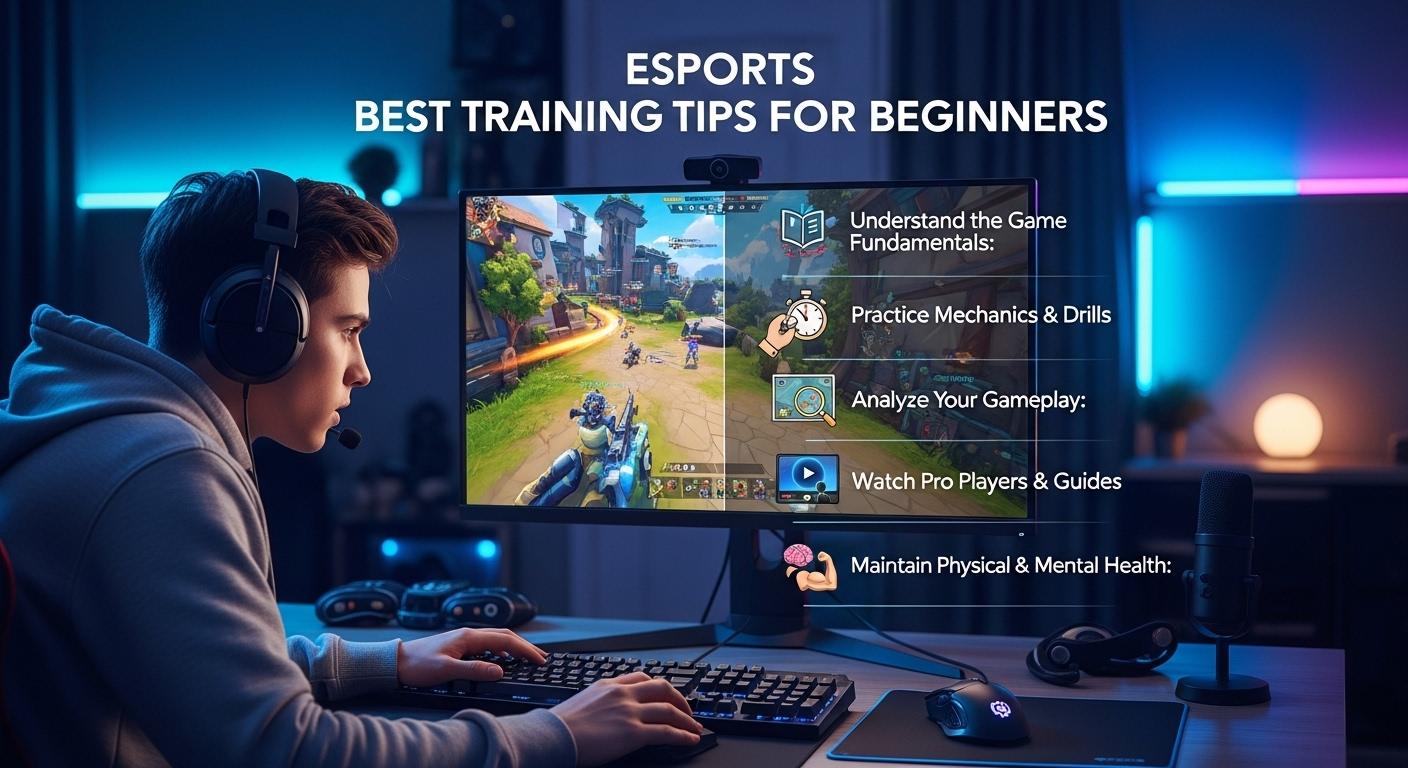
So, you're diving into the world of esports, huh? Awesome. It's like joining a whole new kind of sports team, but instead of a field, you've got a screen, and instead of cleats, you've got a tricked-out gaming rig. But here's the thing: just like any sport, you can't just jump in and expect to be a pro overnight. Esports training is where it's at, and let's be honest, it's a bit more complicated than just playing a ton of games. Or is it?
Actually, that's not quite right. Simply playing a lot can help. But targeted practice? That's the real game-changer. Think of it like this: you could swing a golf club all day long, but without some pointers on your stance and swing, you're probably just going to end up with sore muscles and a frustrated attitude. It's the same with esports. You need to be smart about how you train.
Building a Foundation: The Basics of Esports Training
First things first, let's talk about the fundamentals. We're not just talking about knowing the game inside and out (though that's crucial). I'm talking about the stuff that underpins everything else. According to Wikipedia, esports is more than just playing video games competitively. It requires skills, strategy, and teamwork.
Think of your physical and mental well-being. Seriously. You can't perform at your peak if you're running on fumes. We're talking about proper sleep, a decent diet (lay off the energy drinks, maybe?), and regular exercise. Yes, exercise! Sitting in front of a screen for hours on end isn't exactly a recipe for health, and a healthy body supports a healthy mind. And a healthy mind is critical for fast decision-making in the heat of the moment.
Hand-eye coordination is vital. Use tools that improve your hand and eye coordination. It will help in accuracy and response time during the game.
Game-Specific Training: Honing Your Skills
Okay, now let's get into the nitty-gritty. Every esport is different, and what works for one game might not work for another. So, you need to tailor your training to the specific game you're playing. If you're into a MOBA like League of Legends, you'll need to focus on things like map awareness, team communication, and strategic decision-making. If you're more of a first-person shooter (FPS) fan, like Counter-Strike or Valorant, then aim training, reflex drills, and learning map layouts are going to be key.
I've got to admit, this part fascinates me. Because it's not just about being good at the game; it's about understanding the game at a deeper level. This means studying pro players, watching replays, and analyzing your own gameplay to see where you can improve. And trust me, there's always room for improvement. Always.
One of the best ways to train effectively is to break down the game into smaller, more manageable chunks. Instead of trying to improve everything at once, focus on one specific aspect of your gameplay at a time. Maybe you want to work on your aiming accuracy, or your reaction time, or your decision-making under pressure. Whatever it is, isolate it, practice it, and then integrate it back into your overall game.
The Mental Game: Staying Sharp and Focused
Here's the thing: esports isn't just about physical skill; it's also a mental game. The ability to stay calm under pressure, to make quick decisions, and to maintain focus for extended periods of time is crucial. And this is where mental training comes in. Techniques like visualization, mindfulness, and positive self-talk can make a huge difference in your performance.
I remember when I first started taking mental training seriously. I was playing a lot of StarCraft II at the time, and I was getting incredibly frustrated because I kept choking in high-pressure situations. I would get nervous, my hands would start to shake, and I would make silly mistakes that I wouldn't normally make. It was infuriating. But then I started practicing visualization techniques, where I would mentally rehearse the scenarios that made me the most nervous. And you know what? It worked. I started to feel more confident and more in control, and my performance improved dramatically. So, don't underestimate the power of the mind.
You might want to read this article to get free accessories here.
The Importance of Teamwork and Communication
If you're playing a team-based esport, like League of Legends, Counter-Strike, or Overwatch, then teamwork and communication are absolutely essential. You need to be able to communicate effectively with your teammates, coordinate your strategies, and work together towards a common goal. And that means practicing your communication skills just as much as you practice your individual skills.
Think about it this way: a team of highly skilled individual players who can't communicate effectively is going to get crushed by a team of moderately skilled players who work together seamlessly. It's all about synergy. And that synergy comes from trust, respect, and a shared understanding of the game.
Avoiding Burnout: Pacing Yourself
One of the biggest dangers in esports training is burnout. It's easy to get caught up in the excitement and the desire to improve, and to push yourself too hard. But if you don't pace yourself, you're going to end up exhausted, unmotivated, and potentially even resentful of the game. Or so I've heard (cough). This piece talks about Roblox limited edition items here.
So, how do you avoid burnout? Well, first of all, make sure you're taking regular breaks. Get up and stretch, go for a walk, or do something completely unrelated to gaming for a little while. It will help clear your head and recharge your batteries. Secondly, set realistic goals for yourself. Don't expect to go from zero to hero overnight. Improvement takes time and effort, so be patient with yourself and celebrate your progress along the way. And thirdly, remember to have fun! Esports is supposed to be enjoyable, so don't let it become a chore.
FAQ: Esports Training Questions Answered
How do I know if esports training is actually working for me?
That's a great question, and it's something a lot of people wonder about. The most obvious sign is improvement in your gameplay. Are you winning more games? Are you performing better in key metrics like accuracy, reaction time, or decision-making? But it's not just about the numbers. Are you feeling more confident and in control? Are you enjoying the game more? If the answer to any of these questions is yes, then your training is probably working.
Why is mental training so important in esports?
The frustrating thing about mental training is that it's often overlooked, but it's absolutely crucial for success in esports. Esports is all about performing under pressure, making quick decisions, and staying focused for extended periods of time. And those are all mental skills. Mental training helps you develop those skills, so you can stay calm, focused, and confident even in the most challenging situations. It's like having a secret weapon that your opponents don't know about.
What's the best way to structure my esports training schedule?
Well, it depends on your individual goals, your available time, and your learning style. But a good rule of thumb is to balance your training between individual practice, team practice (if you're on a team), and mental training. You should also make sure to schedule regular breaks and days off to avoid burnout. And don't be afraid to experiment to see what works best for you. What works for one person might not work for another, so you need to find a system that fits your needs.
Is professional esports training worth the investment?
That's a tough question, and the answer depends on your goals and your budget. Professional esports training can be expensive, but it can also provide you with access to experienced coaches, state-of-the-art equipment, and a structured training environment. If you're serious about pursuing a career in esports, then it might be worth the investment. But if you're just playing for fun, then there are plenty of free or low-cost resources available online that can help you improve your game.
Ultimately, effective esports training is about finding what works for you. It's about combining the right techniques with the right mindset, and about putting in the time and effort to improve. So, go out there, train hard, and have fun!
![Peggle [FLASH] Game](https://gamerewardz.com/thumbs/peggle-flash-game_2.webp)