



















Okay, let's talk Free Fire. Specifically, let's dive deep – and I mean deep – into finding that oh-so-elusive perfect headshot sensitivity. Because let's be honest, there's nothing quite as satisfying as popping heads and watching those kill notifications light up your screen, right? But here's the thing, what works for one player is a disaster for another. This isn't a 'one size fits all' kinda deal. It's more like trying to find the perfect pair of jeans – frustrating, time-consuming, but oh-so-worth-it when you finally nail it. And speaking of frustration, have you ever noticed how some days your shots are pinpoint accurate, and other days it's like you're shooting blanks? Yeah, sensitivity is a fickle beast.
But stick with me. We're gonna break this down, explore the nuances, and hopefully, by the end of this, you'll be well on your way to becoming a headshot machine. And don't worry, I won't bore you with technical jargon. We'll keep it real, keep it practical, and maybe even throw in a few personal anecdotes along the way. Because, hey, that's what friends do, right?
Understanding Free Fire Sensitivity Settings
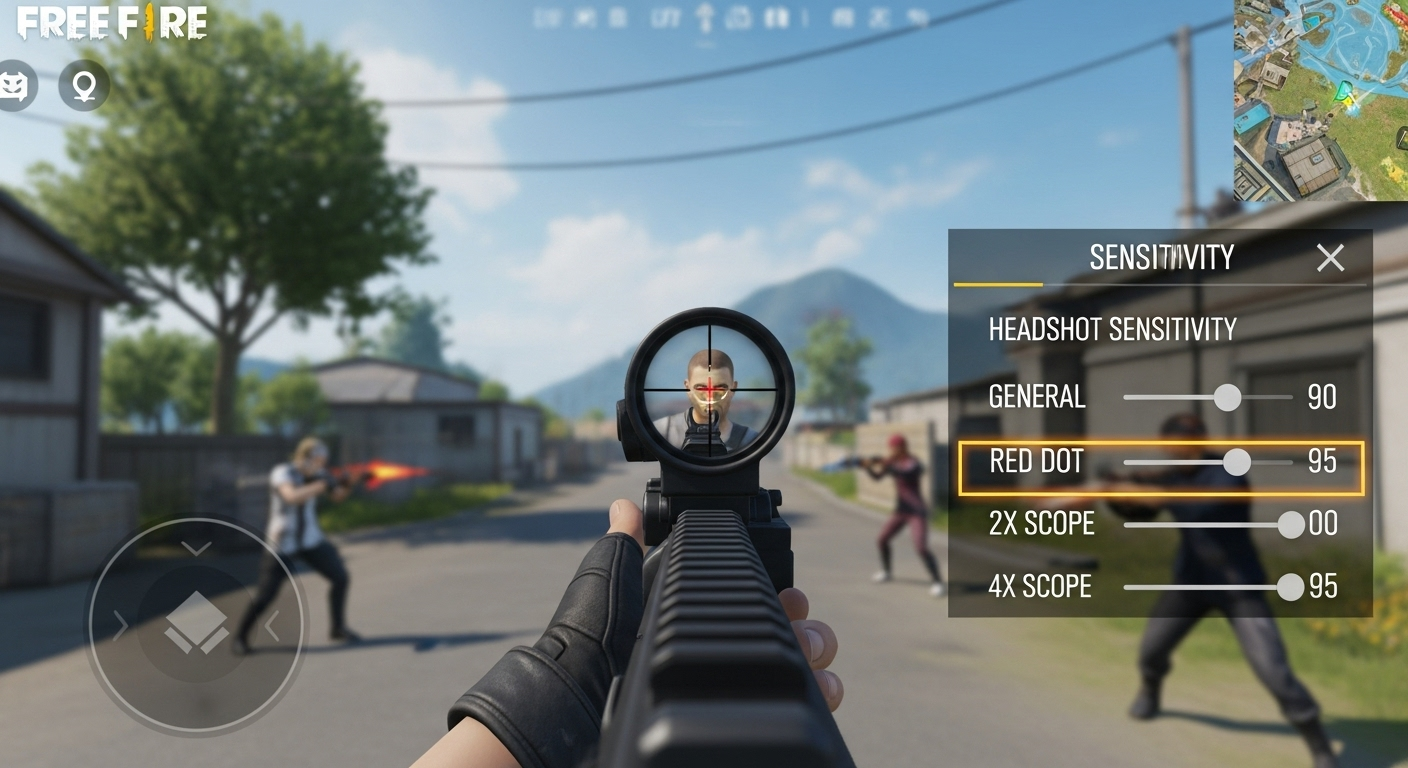
First off, let's get familiar with the landscape. Free Fire offers a range of sensitivity settings, each impacting your aiming in different ways. You've got your General sensitivity, which affects overall movement and aiming speed. Then there's the Red Dot, 2x Scope, 4x Scope, and AWM Scope sensitivities, each tailored to those specific optics. The frustrating thing about this is finding which setting helps the most, and which actually hurts.
And here's a key insight: these settings interact. Changing your General sensitivity will have a ripple effect on your other scopes, and vice versa. It's like a finely tuned orchestra – tweak one instrument and you might throw the whole thing out of whack. I've got to admit, this part fascinates me; how such small changes can yield such drastic differences. What I have found is that by understanding the relationships between these settings, you can begin to fine-tune your aim to perfection.
I initially thought a higher sensitivity was always better – quicker flicks, faster reactions, right? But actually, that's not quite right. Turns out, too high a sensitivity can make your aim jittery and uncontrollable, especially at longer ranges. Imagine trying to paint a masterpiece with a shaky hand. Not gonna happen.
Finding Your Optimal Headshot Sensitivity
Okay, so how do you actually find that sweet spot? Well, here's the thing: there's no magic number. It's all about experimentation and personal preference. But I can give you a starting point, a roadmap to guide your journey. And that's exactly what this is: a journey. Don't expect to nail it overnight. Be patient, be persistent, and most importantly, be willing to adjust along the way.
Start with your General sensitivity. A good starting point is somewhere in the middle – around 50-60. Then, hop into the training grounds and start experimenting. Focus on your target acquisition and tracking. Can you quickly and smoothly aim at your targets? Is your aim stable, or is it constantly overshooting or undershooting? Adjust your sensitivity in small increments (5-10 at a time) until you find a comfortable balance. You might also be interested in learning more about getting free skins in Free Fire, see this Free Fire Skins guide!
But here's where things get interesting. Once you've found a comfortable General sensitivity, it's time to move on to the scopes. This is where you really start to fine-tune your headshot potential. The goal here is to find sensitivities that allow you to quickly and accurately track moving targets while maintaining a stable aim. It's a delicate balance, but it's crucial for landing those crispy headshots. And by the way, have you heard about the new GTA leaks? Check out this GTA Leak Rewards article!
And remember, practice makes perfect. Spend time in the training grounds, experiment with different weapons, and get a feel for how your sensitivity settings affect your aim. The more you practice, the better you'll become at instinctively adjusting your aim and landing those game-winning headshots.
Advanced Techniques and Considerations
Now that you've got the basics down, let's talk about some advanced techniques that can take your headshot game to the next level. One of the most important is mastering recoil control. Because let's face it, even with the perfect sensitivity, you're not going to land many headshots if your gun is constantly kicking all over the place.
Recoil control is all about learning the recoil patterns of different weapons and compensating for them with your aim. Some weapons have vertical recoil, meaning they kick straight up. Others have horizontal recoil, meaning they kick to the left or right. And some have a combination of both. The key is to learn these patterns and adjust your aim accordingly. Okay, let me try to explain this more clearly. If a weapon has vertical recoil, you'll need to pull down on your mouse or joystick to compensate. If it has horizontal recoil, you'll need to move your mouse or joystick to the left or right.
But here's the thing: recoil control isn't just about pulling down on your mouse or joystick. It's also about timing and rhythm. You need to learn to anticipate the recoil and adjust your aim accordingly. It's like dancing with your weapon – you need to feel its movements and respond in kind.
And speaking of advanced techniques, let's talk about crosshair placement. This is all about positioning your crosshair in a way that maximizes your chances of landing a headshot. The basic idea is to keep your crosshair at head level at all times. This way, when an enemy peeks around a corner, you're already aiming at their head.
FAQ: Dialing in Your Headshots
How do I know if my Free Fire headshot sensitivity is too high?
If your aim feels shaky, uncontrollable, or you consistently overshoot your targets, your sensitivity is likely too high. Try decreasing it in small increments until you feel more stable and in control. Remember that a shaky aim is not accurate, and a stable aim is a deadly one. Also try playing with the various scope sensitivity settings!
Why does my sensitivity feel different on different devices?
Screen size, resolution, and device processing power can all affect how sensitivity feels. What feels perfect on one phone might feel completely off on another. Calibrating sensitivity for each device is a must.
What's the deal with different weapons feeling so different?
Each weapon has unique recoil patterns and handling characteristics. A high-recoil weapon will naturally feel harder to control, even with the perfect sensitivity. Experiment with different weapons and adjust your sensitivity accordingly.
Is there an optimal Free Fire headshot sensitivity for AWM?
The AWM is a sniper rifle, and sniper rifles generally benefit from lower sensitivity settings for increased accuracy. Experiment with your AWM scope sensitivity until you find a setting that allows you to make precise adjustments and land those long-range headshots.
Ultimately, finding the perfect sensitivity settings is a personal journey. What works for me might not work for you, and vice versa. The key is to experiment, be patient, and don't be afraid to adjust along the way. With practice and persistence, you'll eventually find that sweet spot that allows you to unleash your headshot potential.
And one last thing: don't get too caught up in the numbers. At the end of the day, Free Fire is a game. It's meant to be fun. So, relax, enjoy the process, and don't stress too much about finding the perfect sensitivity. Just focus on improving your aim, honing your skills, and having a good time. Everything else will fall into place.
Happy headshotting, folks!









![Peggle [FLASH] Game](https://gamerewardz.com/thumbs/peggle-flash-game_2.webp)