










Genshin Impact: Team Building Guide – Create the Ultimate Team!
Okay, let's be real. Genshin Impact throws a lot at you. Beautiful open world, compelling characters, and… a team-building system that can feel more complex than advanced algebra. I remember when I first started, I just threw my highest-level characters together and hoped for the best. Spoiler alert: that's not the way to do it.
But hey, don't worry! We're going to break down the basics of team composition, character roles, and elemental reactions to help you craft a squad that's ready to tackle any challenge Teyvat throws your way. I find this part fascinating – watching seemingly disparate characters synergize and become an unstoppable force.
Understanding the Core Roles
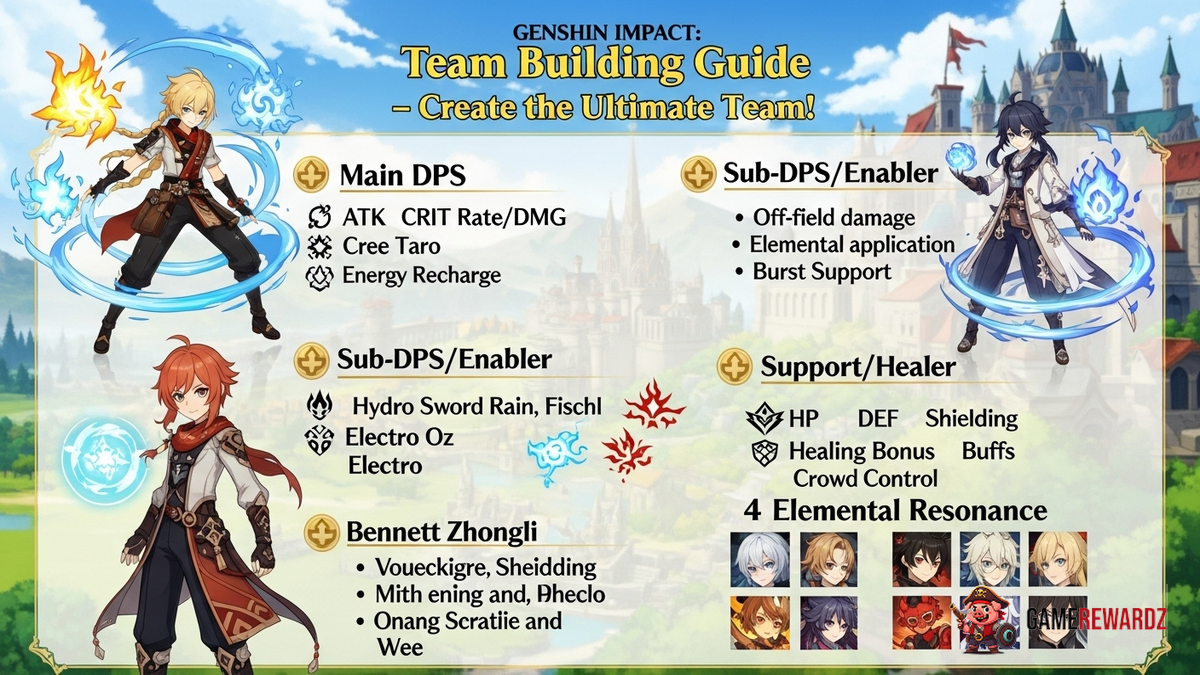
First things first: let's talk roles. In Genshin Impact, characters generally fall into a few key categories:
- Main DPS: Your damage dealer. This is the character you'll be spending the most time on-field, dishing out the big numbers.
- Sub-DPS: These characters provide consistent off-field damage, buffs, or debuffs to support your Main DPS. Think of them as the reliable damage supporters.
- Support: Healers, shielders, and buffers. These characters keep your team alive and boost your damage output. Essential for survival, obviously.
- Enabler: A character whose main job is to setup elemental reactions for the main DPS to capitalize on.
Now, here's the thing: these roles aren't always set in stone. Some characters can flex between roles depending on their build and team composition. Xingqiu, for example, is an excellent Sub-DPS but can also provide some healing utility. Versatility is key!
Elemental Reactions: The Key to Victory
Genshin Impact's combat system revolves around elemental reactions. Combining different elements can create powerful effects, like Vaporize (Hydro + Pyro), Melt (Cryo + Pyro), or Electro-Charged (Electro + Hydro). Mastering these reactions is crucial for maximizing your damage output. Here's another resource I like to consult on this topic, personally. And frankly, it's worth the time to learn the reactions!
Experiment with different elemental combinations to find what works best for your playstyle and the challenges you're facing. Some reactions are better for single-target damage, while others excel at clearing groups of enemies. Which brings me to my next point…
Building Around Your Main DPS
The most effective team compositions are built around a specific Main DPS. Once you've chosen your damage dealer, you can start selecting characters who complement their abilities and elemental affinity. For example, if your Main DPS is Hu Tao (Pyro), you'll want to include characters who can consistently apply Hydro to trigger Vaporize.
Don't be afraid to experiment! Try out different combinations and see what feels the most comfortable and effective. This is a huge part of the fun. Sometimes, the most unexpected teams can be surprisingly powerful. Actually, that reminds me – I initially thought Bennett was just okay, but after looking deeper into his buffing potential… wow!
Examples of Strong Team Compositions
Alright, let's get down to some concrete examples. Here are a few popular and effective team compositions you can try out:
- Raiden National Team: Raiden Shogun (Main DPS), Xingqiu (Sub-DPS), Xiangling (Sub-DPS), Bennett (Support). This team is incredibly versatile and deals tons of damage.
- Hu Tao Vaporize: Hu Tao (Main DPS), Xingqiu (Sub-DPS), Yelan (Sub-DPS), Zhongli (Support). A classic team that relies on consistent Vaporize reactions.
- Ganyu Melt: Ganyu (Main DPS), Xiangling (Sub-DPS), Bennett (Support), Zhongli (Support). Ganyu's charged attacks combined with Melt reactions deal massive damage.
Remember, these are just examples! Feel free to adapt them to your own character roster and preferences. The best team is the one you enjoy playing the most.
But remember what they say: all work and no play make Jack a dull boy! If you need a break from Genshin's more demanding tasks, Poki provides plenty of fun distractions.
FAQ: Your Genshin Impact Team Building Questions Answered
How do I know if my team has enough elemental diversity?
Good question! A team with sufficient elemental diversity typically has at least two different elements represented. This allows you to trigger a wider range of elemental reactions, which can be particularly helpful when facing enemies with different elemental weaknesses. However, some teams may focus on amplifying a single elemental reaction, such as Vaporize or Melt, which may involve fewer elements. Ultimately, it depends on the specific strategy you're aiming for.
What if I don't have the "meta" characters for these teams?
Don't sweat it! While having specific characters can definitely boost your team's performance, it's not essential. There are plenty of viable alternatives you can use. For example, if you don't have Xingqiu, you can try using Barbara or Mona for Hydro application. The key is to find characters who fulfill similar roles and can contribute to your overall team strategy.
How important is character level and talent levels?
Extremely important! Character level directly affects your base stats, while talent levels increase the damage and effectiveness of your abilities. It's always a good idea to prioritize leveling up your Main DPS and core support characters. Don't neglect your talents, either – they can make a significant difference in your overall damage output. Also, weapons. Don't neglect your weapons!
What is the ideal ratio for Crit Rate and Crit DMG?
Ah, the age-old question! The generally accepted ratio is 1:2. Aim for a Crit Rate of around 50-70% and a Crit DMG of around 100-140%. This will give you a good balance between consistent crits and high crit damage. However, the ideal ratio can vary depending on the character and their specific build. Some characters benefit more from higher Crit Rate, while others prioritize Crit DMG. The frustrating thing about this topic is the level of nuance involved.
Ultimately, Genshin Impact: Team Building Guide – Create the Ultimate Team!, it is about finding what works best for you and your team. Experimentation and adaptation are key. Don't be afraid to try new things and see what happens! Happy adventuring!





![Peggle [FLASH] Game](https://gamerewardz.com/thumbs/peggle-flash-game_2.webp)