

























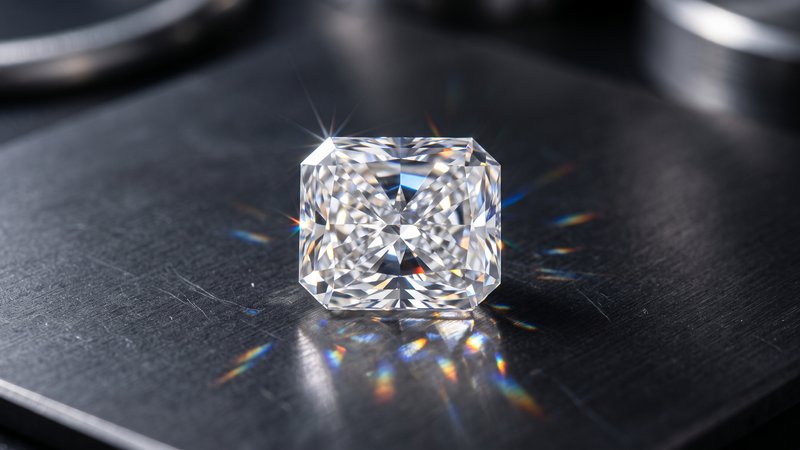
Shopping for a diamond sounds simple until you sit down and look at hundreds of loose gems under bright halogen lights. Cut styles vary wildly. If you want a brilliant rectangular gem with soft trimmed corners, picking out a lab grown radiant cut Diamond can feel like navigating a maze of light reflections. It isn't always clear which specs actually matter on paper.
While building shopping guides and evaluating product models at Game Rewardz, we've tested direct visual inspection methods to figure out what actually makes these lab created gems pop. You don't need a formal gemology degree to avoid flat, lifeless options. You just need to know which numeric parameters to watch on grading reports and what to check when inspecting the stone in real lighting.
Getting the Length-to-Width Ratio Right
Shape determines the silhouette on your finger. Radiant gems combine the square or rectangular outline of an emerald cut with the high-facet sparkle of a round brilliant. Some people prefer an elongated rectangle shape, while others want a squarish look on their ring. So, what's the sweet spot for proportions?
For an elongated shape, look for a length-to-width ratio between 1.15 and 1.35. If you want a classic square profile, aim for 1.00 to 1.05. But don't rely only on certificate numbers. We inspected stones with a 1.25 ratio that looked completely different side by side because corner sizes varied slightly, making one look like a blocky rectangle while the other had long tapered proportions. A stone with overly large trimmed corners ends up looking like a narrow octagon, while tiny cut corners can leave the gem vulnerable to chipping during setting. (Make sure your jeweler sets the gem with 4 protective corner prongs.)
Color and Clarity Grades That Save You Money
Because radiant cuts have 70 facets that break up light reflection, they mask tiny internal blemishes far better than step-cut shapes like emerald cuts. That's a huge win for your budget. You don't need to spend extra money on VVS1 or VVS2 clarity grades unless you want paper perfection.
In most cases, an eye-clean VS2 clarity grade looks completely clear without a loupe. Still, check the plot map on the lab report to see where inclusions lie. If a dark mineral crystal rests right under the flat top table facet, it might show up in direct sunlight. But if inclusions hide near the outer corners, the facet reflections will obscure them easily.
Color requires extra attention. Radiant shapes hold more body color than round brilliants because light bounces around inside the bottom pavilion before exiting through the top. If you mount the stone in white gold or platinum, stick with G or H color grades to keep it looking crisp and bright. And if you plan to set the stone in yellow gold, an I or J color stone will still look bright white against the warm metal frame because yellow gold softens subtle warm tones.
Table, Depth, and Light Reflection Numbers
Gem labs like IGI or GIA don't issue overall cut grades for radiant shapes. That leaves the buyer to judge cut quality based on depth and table percentages alone. It can feel confusing at first. But sticking to specific numeric boundaries filters out bad-looking options fast.
Look for a table percentage between 61% and 69%. Match that with a total depth percentage between 61% and 67%. When a stone gets too deep, it carries extra weight at the bottom where nobody sees it, which makes a 2 carat diamond look as small as a 1.7 carat stone from above. On the flip side, shallow stones under 58% depth leak light out the bottom and end up looking glassy and dim in indoor settings.
Because lab grown diamonds grow using Chemical Vapor Deposition (CVD) or High Pressure High Temperature (HPHT) methods, you should also check for strain lines or brown tinting. CVD gems can occasionally show internal grain lines under intense contrast, so watching a high-definition 360-degree video of the actual loose gem is essential before buying.
How to Spot and Avoid the Bow-Tie Effect
Every elongated cut diamond has a bow-tie to some degree. It's a dark bow-tie shadow running across the middle facets caused by light blocking when you look directly at the center of the gem.
Is a slight bow-tie bad? Not at all. A subtle shadow gives the facet pattern contrast and movement as your hand shifts around. But a heavy black bar across the center ruins the brilliant flash completely. You can't detect this on a paper certificate because lab reports don't list bow-ties. So, you must check high-resolution video under studio lighting or real daylight. Look at the middle section as the gem rotates. If the center stays black throughout the turn, skip that stone.
Action Checklist for Picking Your Diamond
When you're ready to select a loose gem online or in a showroom, work through these simple steps to make sure you get maximum sparkle:
- Verify grading certification first. Always choose gems graded by IGI or GIA that detail growth type and exact measurements.
- Check table and depth proportions. Keep both measurements strictly inside the 61% to 68% range for light return.
- Inspect high-resolution video clips at 10x magnification to confirm the stone doesn't show a thick bow-tie across the center facets.
- Match color grade with your ring setting; pick G color for white metals, or drop to I color if you're selecting yellow gold settings.
- Review the retailer return policy. Ensure you get at least 30 days to examine the stone at home under different room lighting.
Frequently Asked Questions
Do lab grown radiant diamonds sparkle as much as round diamonds?
Round brilliant gems offer maximum overall light symmetry, but a radiant cut Diamond comes very close. The 70 facet pattern produces an energetic crushed-ice look that reflects bright flashes of color across the table.
Is IGI or GIA better for lab grown diamond grading?
Both labs provide strict grading standards, but IGI certifies the vast majority of lab grown options on the market today. They offer consistent color and clarity assessments alongside fast processing times for lab growers.
What size radiant cut looks best on a ring?
A 1.5 carat to 2.0 carat gem is a very popular choice because it offers great finger coverage without feeling overly bulky. Proportions and length-to-width ratio impact visual size far more than total weight alone.
Can lab grown radiant diamonds lose their shine over time?
No, lab grown diamonds are chemically identical to natural diamonds with a 10 rating on the Mohs scale. They won't turn cloudy or lose brilliance over time unless soap scum or oil builds up on the bottom facets.
Are CVD or HPHT lab diamonds better for radiant cuts?
Both growth methods produce gem-quality diamonds when cut properly. HPHT gems occasionally carry blue nuance under UV, while CVD stones can show faint strain lines, so inspecting actual video footage matters more than the growth process tag.










![Peggle [FLASH] Game](https://gamerewardz.com/thumbs/peggle-flash-game_2.webp)