





























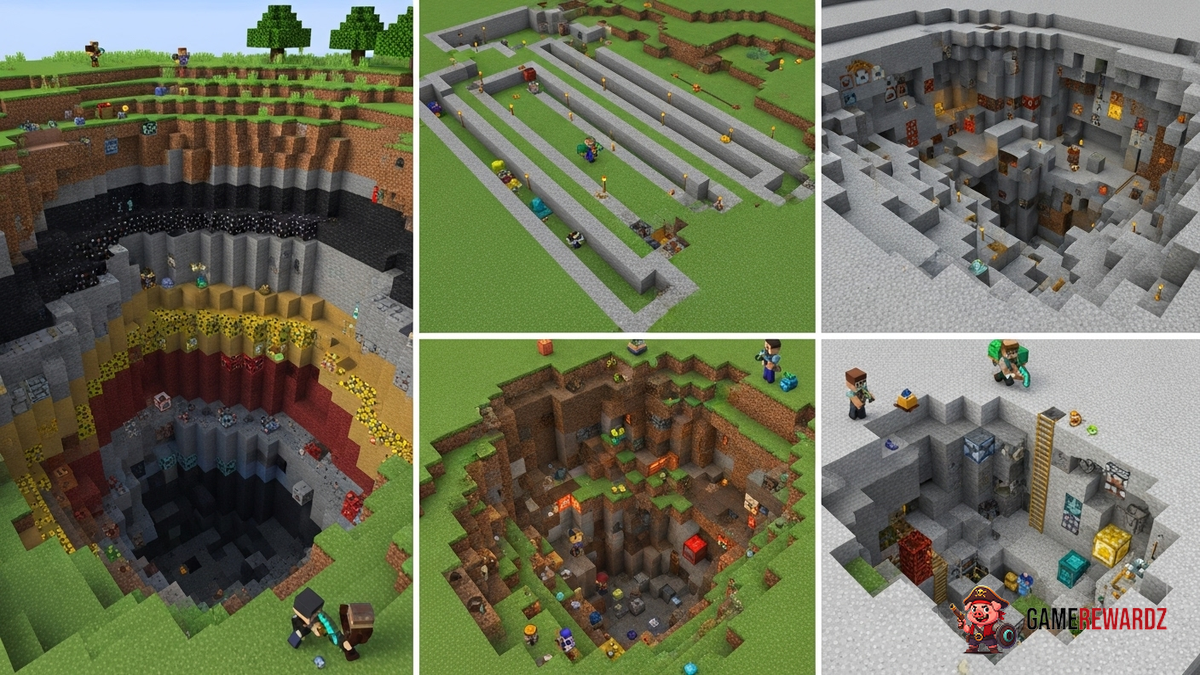
Okay, let's be real. We've all been there. You're knee-deep (or block-deep, I suppose) in a Minecraft world, diamond pickaxe in hand, desperately searching for those elusive diamonds. You've spent hours digging, and all you've got to show for it is a mountain of cobblestone and a growing sense of despair. Sound familiar? Yeah, me too. I've lost count of the hours I've spent mining in Minecraft, but trust me, over the years I've learned a thing or two about how to actually be efficient and successful. Which is why I'm going to share my Minecraft best mining strategies. Forget just digging randomly and hoping for the best.
But here's the thing: there's no single "best" way to mine. It depends on what you're after, your current gear, and even your personal preference. So, consider this less of a rigid guide and more of a collection of tips and tricks to adapt to your own needs. Think of me as your slightly obsessive, slightly eccentric mining mentor. Cool?
Strip Mining for Maximum Yield
Ah, strip mining. The classic. The reliable. The slightly monotonous. But also, incredibly effective. If you're looking for a steady supply of resources, especially diamonds (and who isn't?), strip mining is your friend. Here's the deal: you dig long, straight tunnels, usually two blocks high and one block wide, with a consistent space between them. This ensures you expose a large area to find those valuable ores. I find this works even better with enchantments, for example, the fortune enchantment can significantly increase ore yield. You can read more about it here.
Now, the crucial part is the spacing. Many people advocate for a two-block gap between tunnels, but I've found that a three-block gap is often more efficient. Yes, you'll dig a bit more, but you'll also expose more blocks to your immediate visibility, reducing the chances of missing anything. Actually, that's not quite right... consider the risk. By widening the gap, you reduce your chances of hitting anything. So let's rephrase that. The most effective method is to dig with a two-block gap. But don't rely solely on tunnel vision! I like to break out to smaller caverns and pockets to look for resources.
Which leads me to the optimal Y-level. For diamonds, you want to be at Y-level -58 to -50 in modern versions of Minecraft. Used to be Y-level 11, but those days are long gone! That's where diamonds generate most frequently. Use your coordinates (F3 on most PCs) to keep track.
Branch Mining: A Strategic Expansion
Branch mining is basically strip mining but with, well, branches. You start with a central tunnel and then create smaller tunnels branching off from it at regular intervals. This allows you to explore a wider area without having to dig as many long, monotonous tunnels. Here's the thing about branch mining: it's great for covering ground quickly, but it can be a bit less efficient than strip mining if you're purely focused on maximizing your ore yield. The benefit, though, is discovery of natural cave systems. I initially thought this was a waste of time, but finding natural cave systems can yield even more treasure. Just be careful of the mobs! For more mob fighting strategies, check out this link.
I keep coming back to this point because it's crucial: branch mining is about exploration as much as it is about resource gathering. You're essentially creating a network of tunnels that allows you to quickly move around and discover new areas. This can be particularly useful if you're looking for specific resources or trying to map out a large underground area.
Cave Diving: The Thrill of the Unknown
Cave diving is my personal favorite because, let's face it, it's way more exciting than digging straight lines for hours. It involves exploring naturally generated cave systems, which can be vast and complex. You never know what you're going to find around the next corner – a massive lava lake, a hidden mineshaft, or a glorious vein of diamonds. But here's the catch: cave diving can be dangerous. You'll encounter all sorts of hostile mobs, and it's easy to get lost in the labyrinthine tunnels. I recommend bringing torches (duh!), a good weapon, and plenty of food. Also, a water bucket can be a lifesaver for dealing with lava.
And speaking of lava, be sure to check behind waterfalls! Often there will be small pockets of space that will hold lots of loot. You might be wondering, how do you know when a vein of ore is nearby? Listen carefully! You can often hear mobs from behind the walls, and you can often hear water trickling down walls if there are natural caverns nearby. This is how I approach searching for resources, because I like to work smarter, not harder. Speaking of which, check out this related article here.
Let me try to explain this more clearly...cave diving is high risk, high reward. You're trading the predictability of strip mining for the thrill of exploration and the potential for massive loot hauls. It's not for the faint of heart, but if you're looking for adventure, it's definitely the way to go.
TNT Mining: The Explosive Option
Okay, this is a bit of a controversial one, but it's worth mentioning. TNT mining involves using TNT to blast large areas, quickly exposing any resources hidden within. It's incredibly fast and efficient, but it's also incredibly wasteful and dangerous. You'll need a lot of TNT, and you'll likely destroy a significant portion of the resources in the process. Plus, you'll have to deal with the aftermath – a massive crater filled with debris and lava.
I've got to admit, this part fascinates me. TNT mining is the ultimate expression of the "work smarter, not harder" philosophy, taken to its extreme. It's not for everyone, but if you're in a hurry and don't mind sacrificing some resources, it can be a viable option. Just be careful not to blow yourself up!
The frustrating thing about this topic is... TNT is hard to come by. And it's also easier than ever to die in Minecraft. That makes TNT mining high risk, high reward. If you can make it work, great. But be careful!
FAQ: Your Mining Questions Answered
What's the best Y-level for finding diamonds in Minecraft?
Diamonds spawn most frequently at Y-level -58 to -50 in modern versions. Bring a depth strider potion, and strip mine until you are rich! Make sure you have a good pickaxe as well, because you don't want to be running around with a stone pickaxe.
How can I improve my mining efficiency?
Focus on strip mining at the correct Y-level, use enchantments like Fortune and Efficiency on your pickaxe, and bring plenty of torches to light up your tunnels. Don't forget a water bucket, too – it's essential for dealing with lava!
Is it worth exploring caves for diamonds?
Absolutely! Cave systems can contain massive veins of diamonds and other valuable resources. Plus, they're way more fun to explore than straight tunnels. Just be prepared for danger – bring a good weapon, plenty of food, and be careful not to get lost.
What is the best mining strategy for beginners?
For beginners, I recommend starting with strip mining at Y-level -58 to -50. It's a simple and reliable method for finding diamonds and other resources. Once you're comfortable with that, you can start experimenting with branch mining and cave diving.
Is TNT mining a good idea?
TNT mining can be incredibly fast and efficient, but it's also wasteful and dangerous. You'll destroy a significant portion of the resources in the process, and you'll have to deal with the aftermath. It's not for everyone, but if you're in a hurry and don't mind the risks, it can be a viable option.
So, there you have it – a whirlwind tour of Minecraft mining strategies. Remember, there's no single "best" way to mine. It's all about finding what works best for you and adapting to your own needs and preferences. Now go forth and mine those diamonds! And try not to fall into any lava, okay?













![Peggle [FLASH] Game](https://gamerewardz.com/thumbs/peggle-flash-game_2.webp)