




























Okay, so you're diving into the wild world of Minecraft farms, huh? Smart move. Let's be honest, who actually enjoys spending hours harvesting wheat by hand? Nobody, that’s who. I mean, maybe there's someone out there, but I haven't met them. Instead, think of the redstone contraptions, the efficient designs, the sheer satisfaction of watching your resources pile up automagically. It's digital agriculture at its finest.
And 2025? Yeah, Minecraft's still going strong. It's like LEGOs for the digital age. Always something new to build, tweak, and optimize. But with so many farm designs floating around, it can get overwhelming. Which ones are actually worth your time? Which ones won’t break after five minutes? That's what we're tackling here. I've scoured the depths of the Minecraft community (and, okay, watched a lot of YouTube) to bring you what I think are the 15 best working Minecraft farms for 2025.
Get ready to ditch the manual labor and embrace the automation revolution! Seriously, you won't regret it.
Why Farm in Minecraft Anyway? (Besides Laziness, Of Course)
Alright, so the obvious reason is avoiding tedious tasks. But there's more to it than that. Think about it: food security. You're not just gathering resources; you're building a sustainable ecosystem within your Minecraft world. A reliable food source is a lifesaver when you're exploring deep caves or battling creepers at 3 AM. Trust me on this one. Been there, almost starved. Not fun.
And then there's the trading aspect. Villagers love a good trade, and many of them are willing to exchange emeralds for crops. Emeralds mean better tools, armor, and enchantments. It's a beautiful, blocky cycle of resource acquisition.
Plus, let’s not forget the sheer ingenuity of some of these farms. They’re not just functional; they’re works of art. I remember when this approach first emerged. Some redstone engineers are basically coding in Minecraft, creating insanely complex systems that I can barely wrap my head around. Games on Poki, for example, can give you inspiration for Minecraft.
Top 15 Minecraft Farm Designs for Maximum Efficiency
Okay, here's the meat of the article. But remember, Minecraft is constantly evolving. Updates change mechanics, so what works today might need tweaking tomorrow. Always double-check compatibility with your version before sinking a ton of resources into a build. Now, without further ado...
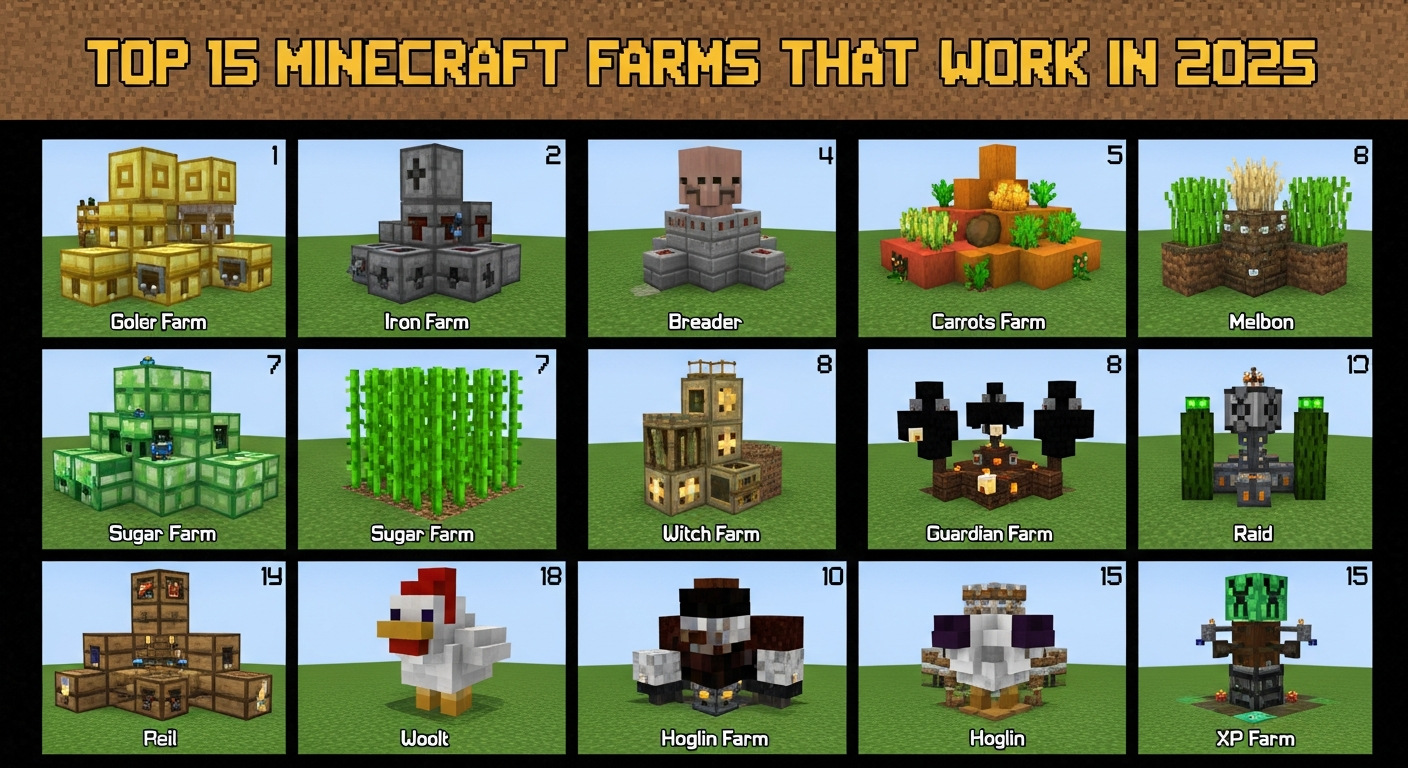
- Automatic Wheat Farm: The classic. Simple, reliable, and a great starting point.
- Carrot/Potato Farm: Similar to wheat, but with a slightly different planting/harvesting mechanic.
- Sugar Cane Farm: Essential for paper, rockets, and trading.
- Melon/Pumpkin Farm: Requires observer blocks for automatic harvesting.
- Cactus Farm: Good for green dye and a decent source of XP.
- Bamboo Farm: Fuel for furnaces and scaffolding.
- Mob Farm (Dark Room): A must-have for bones, gunpowder, and other mob drops.
- Iron Golem Farm: Produces iron ingots, a crucial resource.
- Gold Farm (Nether): Requires a bit more effort, but yields tons of gold.
- Villager Breeder: Essential for setting up efficient trading halls.
- Creeper Farm (for gunpowder): Tricky to build safely, but worth it for the gunpowder.
- Enderman Farm: Teleporting Endermen provide XP and Ender Pearls.
- Chicken Farm: Eggs and feathers are always useful.
- Cow/Sheep Farm: Leather and wool, respectively.
- Bee Farm: Honey and honeycomb for crafting and decoration.
Each of these farms has countless variations, so don't be afraid to experiment and find what works best for you. Some designs are smaller and more compact, while others are massive resource-generating behemoths. And by the way, have you checked this out? Minecraft secret update biomes mobs.
Don't underestimate the power of a well-placed hopper or a cleverly designed redstone circuit. These seemingly small details can make a huge difference in the efficiency of your farm.
Redstone and Automation: Level Up Your Farming Game
Redstone can seem intimidating at first. All those wires, torches, and repeaters... But trust me, it's worth learning. It's what separates a basic farm from a truly automatic farm. I've got to admit, this part fascinates me.
Observer blocks are your friend. They detect changes in block states (like a plant growing) and send out a redstone signal. Hoppers are essential for collecting items and transporting them to chests. Water streams can move crops to collection points. The possibilities are endless!
And don't be afraid to look up tutorials! There are tons of amazing redstone experts on YouTube who can walk you through even the most complex designs. But here's the thing: understanding the underlying principles is key. Don't just blindly copy a build; try to figure out why it works the way it does. That way, you can adapt it to your specific needs and even create your own designs.
Troubleshooting Common Farm Problems
Farms not working? Don't panic! Here are a few common issues and how to fix them:
- Light Levels: Make sure your crops are properly lit. Some crops need sunlight, while others can grow in artificial light.
- Mob Griefing: Creepers can destroy your farms. Protect them with walls or fences.
- Redstone Issues: Double-check your redstone wiring. Make sure all the components are connected correctly.
- Game Updates: As I mentioned earlier, game updates can break farms. Research any changes that might affect your designs.
The frustrating thing about this topic is that Minecraft is constantly changing, what works today might not work tomorrow. That's part of the fun, though, right? Right?
FAQ: Your Minecraft Farm Questions Answered
How do I know if my Minecraft farm is efficient?
Efficiency in a Minecraft farm is all about the output you get for the effort and resources you put in. The best way to gauge this is by measuring how much of a resource you generate over a set period. Set a timer for, say, 15 minutes, and see how many wheat, iron ingots, or whatever you're farming ends up in your collection chests. Compare that to other designs or methods. If you're spending more time fixing the farm than collecting resources, it's time to rethink the design. Also, consider the space it occupies; a compact, high-yield farm is generally more efficient than a sprawling, low-output one. A great design makes all the difference.
Why isn't my automatic farm working?
Automatic farms rely on a delicate balance of mechanics, so troubleshooting can sometimes feel like detective work. First, double-check all your redstone wiring; a single broken connection can halt the entire operation. Ensure all components (observers, pistons, hoppers, etc.) are facing the correct direction and are properly powered. Light levels can also be a sneaky culprit; make sure crops have enough light to grow, but also that mobs aren't spawning where they shouldn't be. Finally, consider the game version you're playing; updates can sometimes change the way certain mechanics work, so a design that worked perfectly before might need tweaking. Actually, that's not quite right - always test it in creative before investing resources in survival. This is a crucial step.
What's the best type of Minecraft farm to start with?
If you're just dipping your toes into the world of Minecraft farms, start simple. An automatic wheat or carrot farm is an excellent choice. These farms are relatively easy to build, require minimal resources, and provide a steady supply of food. Once you've mastered the basics of crop farming, you can move on to more complex designs like mob farms or iron golem farms. The most important thing is to understand the underlying mechanics before tackling more advanced projects. And it should be useful from the start. This is why I recommend wheat/carrot!
Are Minecraft farms worth the effort?
Absolutely! While building a Minecraft farm does require some initial investment of time and resources, the long-term benefits are undeniable. Farms provide a sustainable source of food, materials, and even XP, freeing you up to focus on exploration, building, and other adventures. Once you have a well-established farm, you'll never have to worry about running out of essential resources again. Plus, the satisfaction of watching your automated creation churn out stacks of items is strangely rewarding. And if you have the time, check this out BGMI secret weapon advantage!
So, there you have it. A hopefully helpful guide to the wonderful world of Minecraft farms. Now go forth, automate, and conquer your blocky domain!












![Peggle [FLASH] Game](https://gamerewardz.com/thumbs/peggle-flash-game_2.webp)