
























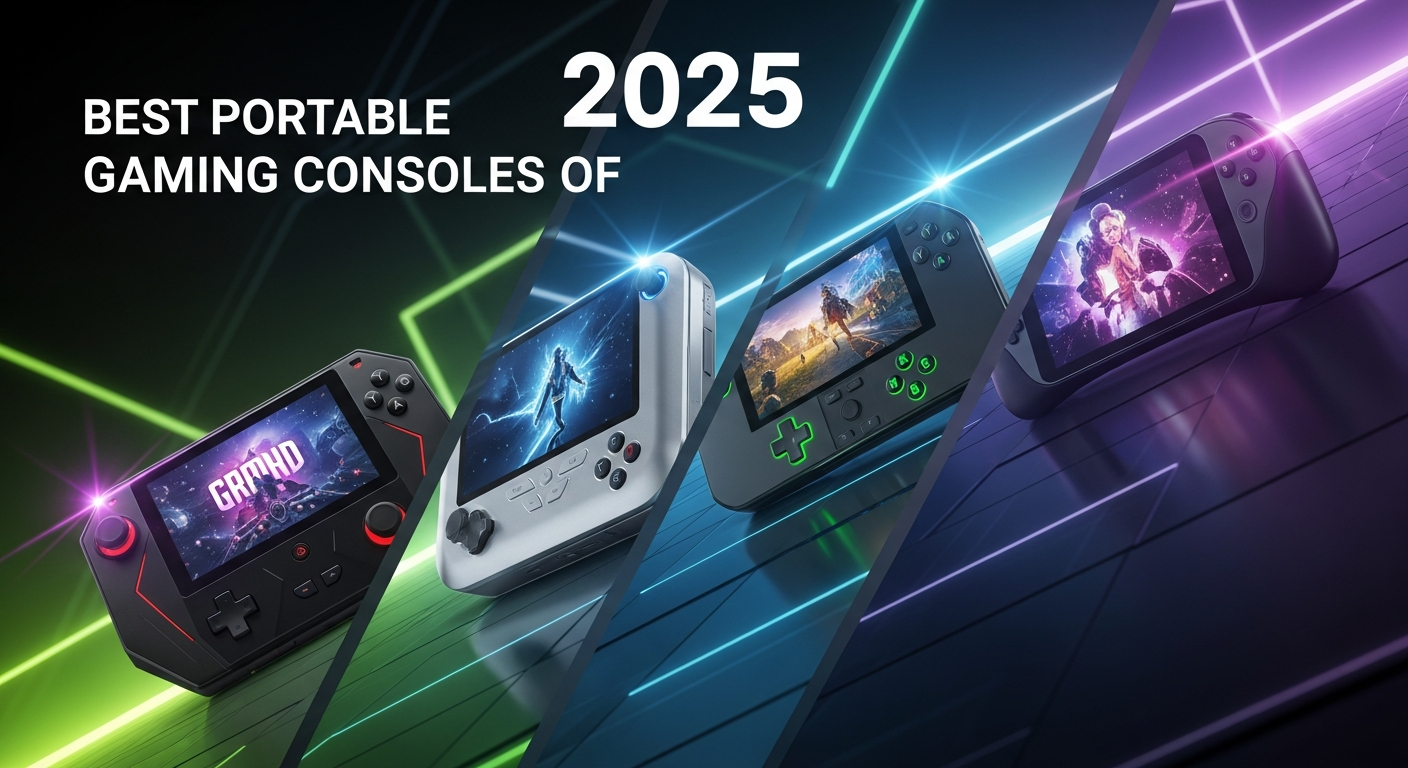
Okay, let's dive into something I'm genuinely excited about: portable gaming consoles. It's more than just nostalgia for me; it's about the sheer freedom of taking your gaming world with you. Forget being chained to a desk or TV – we’re talking gaming on the go, whether you’re crushing levels on a cross-country flight or sneaking in a quick session during your lunch break. You might be wondering, in a world dominated by smartphones and streaming, why handhelds still matter? Well, that’s exactly what we’re going to unpack here, looking ahead to what 2025 might bring.
But first, a confession. I initially scoffed at the idea of dedicated portable gaming consoles making a comeback. I thought, phones do everything now! But then, I tried playing a graphically intense game on my phone for more than, say, 20 minutes. My battery life wept, my phone turned into a miniature furnace, and the constant notifications killed any semblance of immersion. That’s when it hit me: dedicated hardware still has a place. A big place.
The Resurgence of Portable Gaming Consoles
The beauty of these devices lies in their specialization. They are built solely for gaming. This means optimized performance, better battery life, and controls designed for extended play sessions. It's a completely different experience compared to trying to shoehorn a AAA title onto a device primarily designed for calls, texts, and TikTok. Think about it this way: would you rather use a Swiss Army knife to carve a Thanksgiving turkey, or a proper carving knife? Both can do the job, but one is infinitely better suited for the task.
The frustrating thing about this topic is separating hype from reality. Every year, we see supposed "console killers" emerge, only to fade into obscurity. The key to longevity seems to be a combination of strong first-party titles (think Nintendo), a robust indie game scene, and a willingness to experiment with new technologies. Speaking of, handheld gaming consoles are evolving rapidly.
What to Expect in 2025: Trends and Predictions
So, what's on the horizon for portable gaming in 2025? I’ve got a few thoughts. First, expect more powerful hardware. The Steam Deck has already shown us that it's possible to pack a considerable amount of processing power into a relatively small device. I predict we'll see other manufacturers pushing the boundaries even further, perhaps with custom silicon designed specifically for portable gaming. This could mean smoother frame rates, higher resolutions, and more visually stunning games on the go.
Second, cloud gaming integration is only going to get deeper. While I'm a firm believer in the benefits of local processing power, the convenience of streaming games from the cloud is undeniable. Imagine having access to a vast library of titles without needing to download anything. The challenge, of course, is ensuring a stable and low-latency connection. But with the continued rollout of 5G and advancements in cloud gaming technology, I'm optimistic that this will become a more viable option in the years to come.
And, you might be wondering about new form factors and input methods. I'm personally hoping to see more experimentation in this area. We've already seen devices like the Nintendo Switch blur the line between portable and home console. Perhaps we'll see more modular designs that allow you to customize your device to suit your specific needs. Or maybe we'll see the emergence of new input methods, such as motion controls or even augmented reality integration. The possibilities are endless.
The Games Make the Console
But here's the thing: all the fancy hardware in the world won't matter if there aren't any good games to play. That's why the software ecosystem is so crucial. A strong lineup of first-party titles is essential for attracting early adopters and building a loyal fanbase. But equally important is a thriving indie game scene. Indie developers often bring fresh ideas and innovative gameplay mechanics to the table, and they can help to fill the gaps between major releases. Consider also the modding community. What would Minecraft be without it? Speaking of, you might find these secret villager trades interesting here.
I keep coming back to this point because it's crucial: a console is only as good as its games. Without a compelling library of titles, even the most powerful and innovative device will eventually gather dust on a shelf.
Battery Life and Beyond
Of course, battery life remains a key consideration for any portable gaming console. Nobody wants their gaming session to be cut short by a low battery warning. Manufacturers are constantly working to improve battery technology, and we're seeing incremental gains each year. But beyond just increasing battery capacity, there's also a growing focus on power efficiency. Optimizing the hardware and software to consume less power can have a significant impact on overall battery life.
Another area that deserves attention is charging technology. Fast charging is becoming increasingly common on smartphones, and I'd love to see it become more prevalent on portable gaming consoles as well. Being able to quickly top up your battery before heading out the door can make a big difference. What would also be great is universal charging. Maybe someday soon we will have one plug for everything!
FAQ: Your Portable Gaming Questions Answered
How do I choose the right portable gaming console for my needs?
That's the million-dollar question, isn't it? It really depends on what you're looking for. If you're primarily interested in playing Nintendo's first-party titles, then the Switch is the obvious choice. If you want access to a wider range of PC games, the Steam Deck might be a better fit. Consider the types of games you enjoy, your budget, and your tolerance for tinkering (some devices require more setup than others). Read reviews, watch videos, and try to get hands-on experience with different consoles before making a decision. Weigh pros and cons, read forums...do your due diligence.
What kind of battery life can I expect from modern handhelds?
It varies wildly depending on the device and the games you're playing. Some consoles can squeeze out 6-8 hours of playtime on a single charge, while others might only last for 2-3 hours. Graphically demanding games will typically drain the battery faster. Look for consoles with adjustable power settings that allow you to prioritize battery life over performance. Always a trade-off.
Are portable gaming consoles worth it when I already have a smartphone?
That's a fair question! While smartphones can certainly be used for gaming, they're not necessarily the ideal platform. Dedicated portable gaming consoles offer better ergonomics, physical controls, and optimized performance. And, crucially, they won't drain your phone's battery when you’re out and about. It's about having the right tool for the job. If you're serious about mobile gaming, a dedicated console is definitely worth considering. Also, don't forget about all the free rewards, check this out here.
Will portable gaming consoles become obsolete with cloud gaming?
I don't think so, at least not in the near future. Cloud gaming has a lot of potential, but it's not quite ready to replace local processing power entirely. Latency and bandwidth issues can still be a major problem, especially in areas with poor internet connectivity. Plus, not everyone wants to rely on an internet connection to play their games. There will likely be a coexistence of both technologies, with cloud gaming supplementing rather than replacing portable consoles.
So, where does that leave us? Portable gaming consoles are far from dead. In fact, they're experiencing a renaissance, driven by powerful hardware, innovative software, and a growing demand for gaming on the go. As we look ahead to 2025, I'm excited to see what new technologies and experiences emerge. One thing's for sure: the future of portable gaming is bright.













![Peggle [FLASH] Game](https://gamerewardz.com/thumbs/peggle-flash-game_2.webp)