






Okay, let's be honest. Who hasn't dreamed of playing the latest AAA titles on their phone during a boring meeting? Or maybe on a dusty old laptop that could barely handle Minesweeper back in the day? That's the promise of cloud gaming, and honestly, it's getting pretty darn close to being a reality. But with so many services popping up, how do you pick the right one? Well, buckle up, because we're diving headfirst into the top 10 cloud gaming platforms that are worth your attention.
The Contenders: A Quick Overview
Before we jump into the nitty-gritty, let's set the stage. Cloud gaming, at its core, is about streaming games to your device from a remote server. Think of it like Netflix, but for video games. The heavy lifting is done elsewhere, so you don't need a powerhouse PC or console to enjoy the latest titles. The frustrating thing about this, however, is the inconsistent quality. Sometimes it's pure bliss, other times...lag city.
And that brings us to our list. I've played around with most of these (some more than I'd like to admit) and factored in game selection, pricing, performance, and overall user experience. So, without further ado, let’s get started!
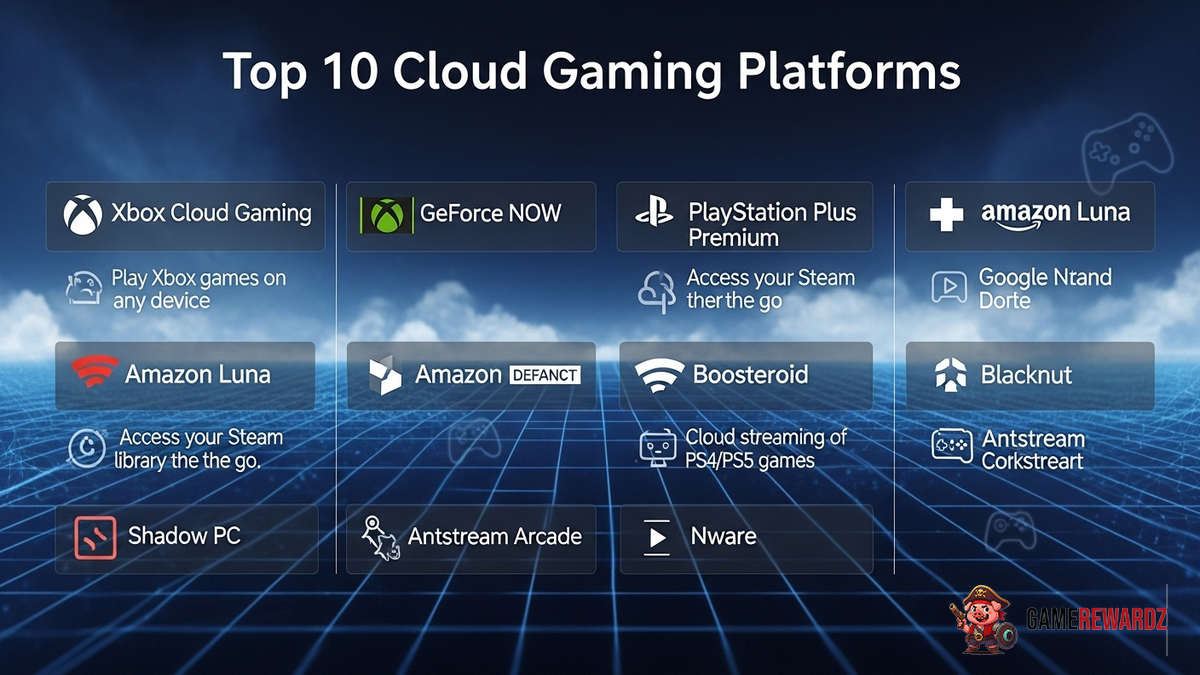
- Nvidia GeForce Now: The big daddy, if you will. Boasting a massive library and multiple tiers, GeForce Now offers something for everyone. They even let you stream PC games you already own from stores like Steam and Epic. How cool is that?
- Xbox Cloud Gaming (Beta): Part of Xbox Game Pass Ultimate, this is a no-brainer if you're already in the Xbox ecosystem. Stream a ton of Xbox games to your phone, tablet, or PC. Works surprisingly well. You might also want to check Fortnite crazy collaboration with xbox cloud gaming.
- PlayStation Plus Premium: Sony's offering is a mixed bag. It includes some PS4 and PS5 games that you can stream, but the selection is smaller than its competitors. Still, if you're a PlayStation diehard, it's worth a look.
- Amazon Luna: Amazon's cloud gaming service is slowly but surely gaining traction. Luna offers different channels, each with its own subscription fee, focusing on different game genres. They even have retro games.
- Google Stadia: Wait, what? Okay, okay, I know what you're thinking. Stadia is… well, it's complicated. While Google sunsetted the Stadia service, the technology lives on through other gaming platforms.
- Shadow: This is a slightly different beast. Shadow essentially rents you a full-fledged Windows gaming PC in the cloud. You can install whatever games you want and play them as if you were sitting in front of a high-end rig. Pretty neat.
- Blacknut: A family-friendly option with a focus on casual and indie games. Blacknut offers a curated library that's safe for kids. It is one of the unlock secret free fire bundle.
- Boosteroid: Another platform that lets you stream PC games you already own. Boosteroid is available in more regions than some of its competitors, which is a plus.
- Vortex Cloud Gaming: A budget-friendly option with a smaller game library. Vortex is a good choice if you're just looking to dip your toes into cloud gaming.
- Utomik: Utomik provides a download-and-play service (like Xbox Game Pass) with the option to stream certain games. It's a hybrid approach that I find pretty interesting.
Finding the Right Fit: Key Considerations
Okay, so that's the list. But how do you actually choose the best cloud gaming platform for you? Well, here's the thing: it depends. Let me try to explain this more clearly...
- Game Selection: What games do you actually want to play? Make sure the platform offers the titles you're interested in.
- Pricing: Cloud gaming services come in all shapes and sizes when it comes to pricing. Some offer flat monthly fees, while others charge by the hour. Choose a plan that fits your budget.
- Performance: This is crucial. A smooth, lag-free experience is essential. Do some research and see what other users are saying about the platform's performance in your region. Internet connection is also important and here are some online multiplayer games you can play when connected to the internet.
- Device Compatibility: Can you play on the devices you own? Most platforms support PCs, Macs, and Android devices, but iOS support can be hit-or-miss due to Apple's App Store policies.
Beyond the Hype: Real-World Expectations
Look, cloud gaming isn't perfect. There's still the potential for lag, especially if you have a shaky internet connection. And the graphics might not be quite as crisp as they would be on a dedicated gaming PC or console. But when it works well – and it often does – it's pretty magical. The ability to play demanding games on almost any device is a game-changer (pun intended!).
FAQ: Your Cloud Gaming Questions Answered
How much internet speed do I really need for cloud gaming?
This is a big one! Most cloud gaming services recommend at least 15-25 Mbps download speed for a decent experience. But honestly, the faster, the better. Latency (ping) is also crucial. Aim for a ping time of under 40ms for optimal performance. If your internet is struggling, you might experience stuttering, lag, or even disconnections.
What about data usage? Will cloud gaming eat up my data plan?
Absolutely. Cloud gaming can be a data hog. Expect to use several gigabytes of data per hour, especially at higher resolutions. If you have a limited data plan, be mindful of your usage or consider upgrading to an unlimited plan. It’s also worth checking if your ISP has any data caps, as exceeding them can result in additional charges.
Is cloud gaming really cheaper than buying a console or gaming PC?
It can be, especially if you're only interested in playing a few games and don't want to shell out hundreds (or thousands!) of dollars for hardware. But if you plan on playing a lot of games for a long time, the subscription fees can add up. Do the math and see what makes the most sense for your gaming habits. It’s also worth considering the cost of upgrading your internet if necessary, as that can significantly impact the overall cost.
How do I know if a cloud gaming service is available in my country?
This is a common question, as not all cloud gaming services are available worldwide. The best way to check is to visit the platform's website and look for a list of supported countries. Some services may also offer a free trial, allowing you to test the service's performance in your region before committing to a subscription.
So, there you have it. My take on the top 10 cloud gaming platforms. The future of gaming is definitely in the cloud, and I'm excited to see how these services continue to evolve. Now, if you'll excuse me, I've got a virtual world to explore!






![Peggle [FLASH] Game](https://gamerewardz.com/thumbs/peggle-flash-game_2.webp)