
















So, you want to be a pro gamer, huh? That's the dream, isn't it? Bright lights, screaming fans, and maybe, just maybe, enough prize money to finally pay off those student loans. But here's the thing, and it's a big one: raw talent alone ain't gonna cut it. You need the right gear. Not just any gear, but top-tier esports equipment that can give you that competitive edge. Think of it like this: a Formula 1 driver isn't going to win any races in a Ford Fiesta, are they?
But where do you even start? The world of esports gear is a vast, confusing landscape filled with jargon, marketing hype, and a whole lot of things that might look cool but don't actually improve your gameplay. That's where I come in. I've spent way too many hours (and dollars, let's be honest) testing out different mice, keyboards, headsets, and monitors. I've sifted through the noise, separating the wheat from the chaff, to bring you a curated guide to the essential esports equipment that can actually make a difference. And, yeah, I'm going to inject a little opinion in there too. Because, well, why not?
The Mouse: More Than Just a Clicker
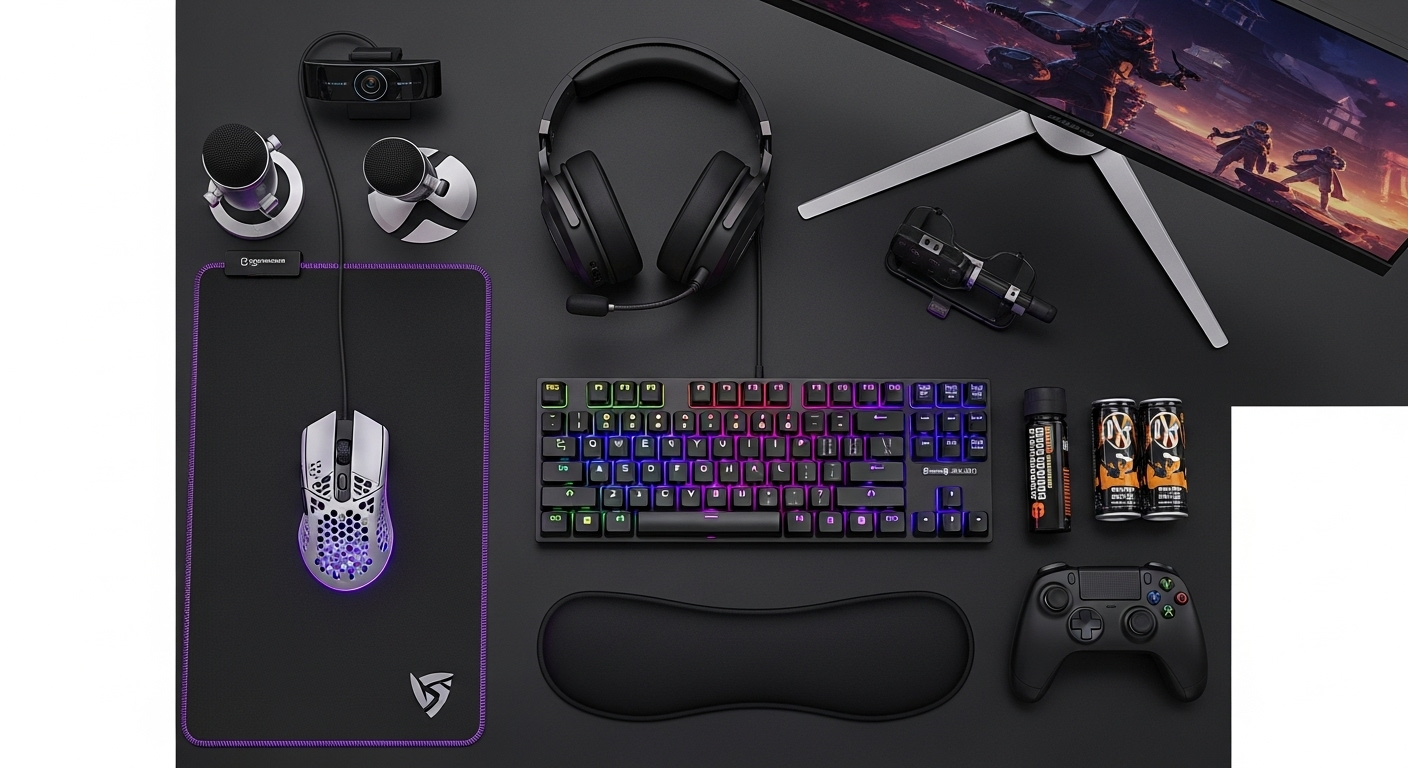
Let's start with the mouse, arguably the most crucial piece of equipment for most esports titles. You might be thinking, "A mouse is a mouse, right?" Wrong. So very wrong. The difference between a cheap, generic mouse and a high-performance gaming mouse is night and day. We're talking about responsiveness, accuracy, comfort, and customization. All things that can seriously impact your aim, your reaction time, and your overall performance.
Think about it this way: your mouse is your direct link to the game world. It's how you translate your thoughts and reflexes into action. A laggy, inaccurate mouse is like trying to paint a masterpiece with a shaky brush. You're just not going to get the results you want.
What to look for? High DPI (dots per inch) is important, but it's not the only factor. A higher DPI allows for more precise movements, but too high can actually make your mouse feel jittery and uncontrollable. Find a DPI that feels comfortable for you. Sensor quality is also key. You want a mouse with a sensor that tracks accurately and consistently, without any weird acceleration or prediction. And, of course, consider the shape and weight. A mouse that feels good in your hand will allow you to play for longer periods of time without fatigue.
Keyboard Considerations: More Than Just Typing
Next up: the keyboard. Now, I know what you're thinking: "Isn't a keyboard just a keyboard?" Well, yes and no. While any keyboard will technically allow you to type and press keys, a dedicated gaming keyboard offers a number of advantages over a standard office keyboard. First off, mechanical switches. Forget those mushy, unsatisfying rubber dome keyboards. Mechanical switches offer a tactile, responsive feel that can improve your accuracy and speed. Plus, they just feel darn good to type on. Seriously, once you go mechanical, you'll never go back.
There are also different types of mechanical switches to choose from, each with its own unique feel and sound. Linear switches are smooth and consistent, tactile switches provide a noticeable bump when the key actuates, and clicky switches offer both a tactile bump and an audible click. Which one is right for you? It's all a matter of personal preference. I prefer tactile switches myself, but others swear by linear or clicky switches. The best way to find out is to try them out for yourself.
Beyond the switches, look for features like N-key rollover (which ensures that all your key presses register, even when pressing multiple keys simultaneously), programmable macro keys (which allow you to execute complex commands with a single keystroke), and, of course, customizable RGB lighting (because who doesn't love a little bit of bling?).
Audio Advantage: Headsets That Help You Hear Every Detail
Don't underestimate the importance of a good headset. In many esports titles, audio cues are crucial for gaining a competitive advantage. Hearing footsteps, gunshots, or enemy abilities can give you vital information that can help you react faster and make better decisions. A cheap, tinny headset just isn't going to cut it. You need a headset that delivers clear, accurate sound with good directional audio. This means you can pinpoint the exact location of sounds, giving you a 360-degree awareness of your surroundings.
Comfort is also a key factor. You'll be wearing your headset for long periods of time, so you want something that feels comfortable and doesn't cause fatigue. Look for headsets with plush earcups, adjustable headbands, and lightweight designs. And, of course, consider the microphone quality. You need a microphone that delivers clear, crisp audio so your teammates can hear you loud and clear. Nobody wants to listen to a garbled mess of static and background noise.
Monitor Matters: Seeing Is Believing
Finally, let's talk about monitors. Your monitor is your window into the game world. It's how you see everything that's happening, so it's crucial to have a monitor that delivers a clear, smooth, and responsive image. Refresh rate is one of the most important factors to consider. A higher refresh rate (measured in Hz) means that the monitor updates the image more frequently, resulting in a smoother, more fluid experience. For esports, you'll want a monitor with a refresh rate of at least 144Hz, but 240Hz or even 360Hz is even better if your budget allows. You might be wondering how does it even matter? Here's the thing: input lag, or latency, matters.
Response time is another important factor. This is the amount of time it takes for a pixel to change color. A lower response time means less ghosting and blurring, resulting in a sharper, clearer image. Look for a monitor with a response time of 1ms or less. Panel type also matters. TN panels offer the fastest response times, but they typically have poorer color accuracy and viewing angles. IPS panels offer better color accuracy and viewing angles, but they typically have slower response times. VA panels offer a compromise between TN and IPS panels, with good color accuracy and decent response times. I've got to admit, this part fascinates me – the way these technologies constantly evolve.
Esports Gear: Price vs. Performance
Of course, all of this gear can get expensive. Very expensive. It's easy to get caught up in the hype and spend a fortune on the latest and greatest equipment. But here's the thing: you don't necessarily need to break the bank to get a competitive edge. There are plenty of affordable options that offer excellent performance. The key is to do your research, read reviews, and find the gear that's right for you and your budget. Don't just buy the most expensive stuff because you think it will automatically make you a better player. It won't.
But don't cheap out too much either. Investing in quality esports equipment is an investment in your own performance. It's like buying a good pair of running shoes if you're a marathon runner. It's not going to magically make you a faster runner, but it will help you perform at your best and prevent injuries. Remember, it's a balance. Find the sweet spot between price and performance that works for you.
FAQ: Answering Your Burning Questions About Esports Equipment
How much does it really matter, getting all this fancy gear?
Okay, let's be real. Having the best esports equipment in the world isn't going to magically turn you into a pro gamer overnight. Skill, practice, and dedication are still the most important factors. But the right gear can give you a competitive edge. It can help you react faster, aim more accurately, and play more comfortably. Think of it as fine-tuning your performance. It's not going to make you a god, but it can help you reach your full potential. It's kind of like the placebo effect but with tangible benefits.
Is RGB lighting just for show, or does it actually do something?
Alright, the elephant in the room. Yes, RGB lighting is mostly for show. It doesn't actually improve your gameplay (despite what some marketing departments might want you to believe). But hey, if it makes you feel good and adds a little bit of personality to your setup, then why not? Plus, some keyboards and mice allow you to program the RGB lighting to indicate certain in-game events, which can be useful (but let's be honest, it's mostly for show).
What's more important, a good mouse or a good keyboard?
That's a tough one, and it really depends on the game you're playing. For most FPS games, I'd say the mouse is slightly more important, as it directly impacts your aim and reaction time. But for games that rely heavily on keyboard inputs, like MOBAs or RTS games, a good keyboard is just as important. Ultimately, it's best to invest in both a good mouse and a good keyboard. Think of them as a dynamic duo, working together to help you dominate the competition.
How do I know if I need to upgrade my esports equipment?
This is a question I ask myself far too often! The frustrating thing about this topic is that there's no easy answer. If you're experiencing noticeable lag, input delay, or discomfort with your current gear, then it's probably time for an upgrade. But sometimes, it's just a matter of wanting something new and shiny. And that's okay too! Just be sure to do your research and make informed decisions before dropping a bunch of cash on new equipment.
Ultimately, the best esports equipment is the equipment that works best for you. Don't be afraid to experiment, try out different options, and find the gear that feels right in your hands. And remember, skill and practice are still the most important factors. No amount of fancy gear can compensate for a lack of dedication. Now go out there and frag some noobs!







![Peggle [FLASH] Game](https://gamerewardz.com/thumbs/peggle-flash-game_2.webp)