













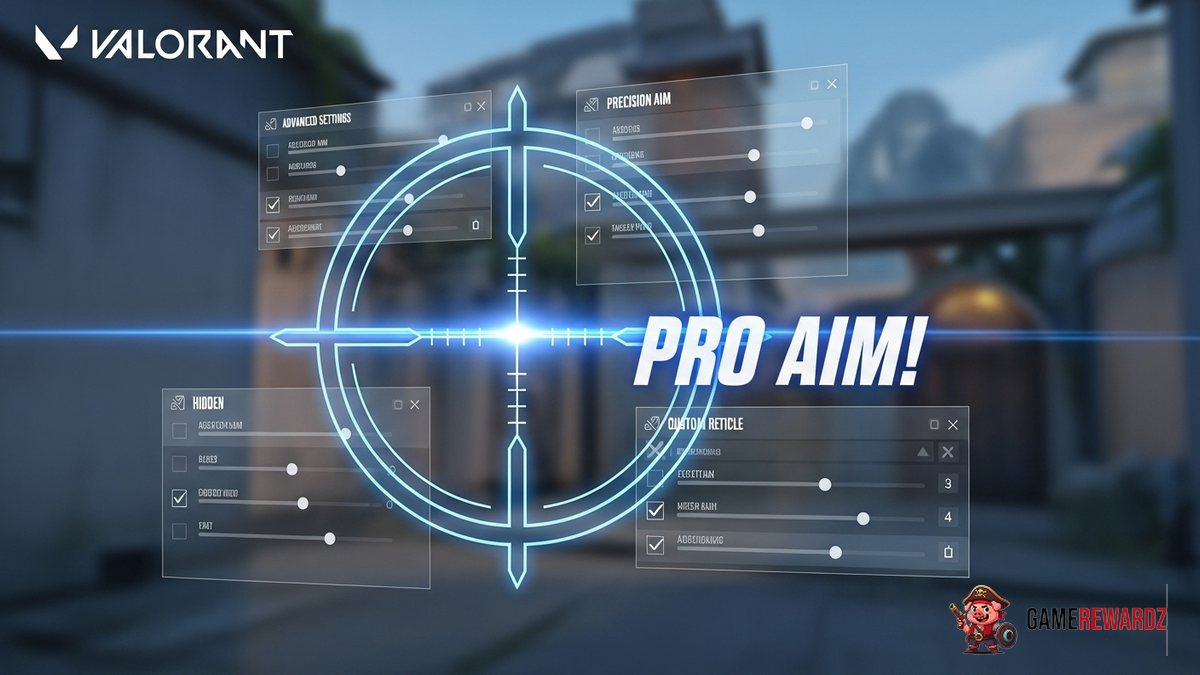
Okay, let's be real. In Valorant, aiming is...everything. You can have the flashiest skins and know all the callouts, but if your crosshair placement is potato, you're gonna have a bad time. And I mean bad. So, what if I told you there are some hidden crosshair settings tucked away in the options menu that could seriously level up your game? I'm not talking about just tweaking the color or thickness (though we'll cover that too). We're diving deep, people.
Actually, before we get started, a quick disclaimer: I'm not promising this will instantly turn you into a Radiant god. But trust me, experimenting with these less-known settings can give you a serious edge. And hey, even if it doesn't make you a pro, at least your crosshair will look cooler, right? You can find some cool games here: Crazy Games.
Unlocking Your Valorant Potential: Beyond the Basics
So, you've messed with the primary crosshair settings – color, outlines, center dot (personally, I'm a center dot kinda guy). But what about the other stuff? The stuff Riot doesn't exactly shout from the rooftops? Let's dig in. I remember when I first started tweaking these settings, I was amazed at how much of a difference they made.
First up: Inner and Outer Line Offset. Think of this as the distance between the center of your screen and the start of your crosshair lines. A smaller offset creates a tighter, more precise feel. A larger offset… well, it gives you more visual space, but can feel a bit floaty. It's all preference, but experiment! You might be surprised.
And speaking of lines, let's talk about Movement Error and Firing Error. These settings determine how much your crosshair dynamically changes when you move or fire your weapon. Some players like them cranked up to max for maximum visual feedback. Personally, I find that distracting. A little is okay, but too much and it feels like my crosshair is having a seizure. Finding the sweet spot is key. Which reminds me, did you hear about the new Intel gaming CPU? Apparently, that helps with Valorant performance too. (Just kidding...kind of.)
The Hidden Gems: Fine-Tuning for Pro Aim
Okay, now for the really good stuff. The settings that separate the casual tweakers from the dedicated crosshair connoisseurs. I'm talking about Show Spectated Player's Crosshair. Sounds simple, right? But here's the thing: watching pro players and analyzing their crosshair settings can be incredibly insightful. Why reinvent the wheel when you can learn from the best? Like those crossword puzzles – always learning!
But here's where it gets interesting. Don't just blindly copy their settings! What works for one player might not work for you. Instead, pay attention to why they're using those settings. Are they prioritizing precision? Visual clarity? Dynamic feedback? Then, try to adapt those principles to your own playstyle.
And that brings me to another crucial point: practice. No amount of crosshair tweaking will make you a better player if you don't actually put in the time to train your aim. Head into the range, hop into a Deathmatch, and experiment! See what feels good, what helps you land those headshots, and what just makes you feel more confident.
One more thing (because I can't help myself). This is slightly off-topic, but optimizing your PC settings can make a HUGE difference in your aiming ability. I mean, obviously, right? Make sure your game is running smoothly, your resolution is set correctly, and your input lag is as low as possible. This is crucial! Because I think the default resolution isn't always the best one.
Valorant Crosshair Optimization: Is Static the Way To Go?
Here's a question I get asked a lot: should I use a static or dynamic crosshair? And the answer, as always, is: it depends. A static crosshair doesn't change size or shape when you move or fire. This can be great for building muscle memory and developing consistent aim. You always know exactly where the center of your screen is, no matter what.
A dynamic crosshair, on the other hand, provides more visual feedback about your movement and firing inaccuracies. This can be helpful for learning how to control your recoil and avoid moving while shooting. But it can also be distracting, especially if the crosshair changes too dramatically.
Personally, I prefer a static crosshair with minimal movement error. I want that visual consistency. I want to know that if my crosshair is on someone's head, I'm going to hit them (assuming my aim is on point, of course). But, again, this is just my preference. Experiment and see what works best for you. Maybe try some Poki games to test the waters.
FAQ: Your Valorant Crosshair Questions Answered
How do I find the crosshair settings in Valorant?
Easy peasy! Just hit the Escape key during a game (or in the main menu), click on "Settings," and then navigate to the "Crosshair" tab. From there, you'll find a whole host of options to tweak and customize to your heart's content. Have fun!
Why does my crosshair disappear sometimes?
This can happen if you have the "Show Spectated Player's Crosshair" option enabled and you're spectating someone who has their crosshair turned off (yes, that's a thing). It can also be caused by certain graphical glitches. Try restarting your game or updating your drivers if you're experiencing this issue frequently.
What's the best crosshair color for Valorant?
There's no single "best" color, but generally, you want something that stands out against most backgrounds in the game. Bright colors like cyan, green, and yellow tend to work well. Avoid colors that blend in with the environment, like gray or brown. And whatever you do, don't pick a color that's already used extensively in the game (like red, which is used for enemy outlines). The goal is to make your crosshair as visible as possible, even in chaotic situations.
How do I know if my crosshair settings are actually helping me?
The best way to tell is to track your performance over time. Are you consistently landing more headshots? Are you feeling more confident in your aim? Are you winning more gunfights? If the answer to these questions is yes, then your crosshair settings are probably working for you. But if you're not seeing any improvement, don't be afraid to experiment further. Also, don't expect to suddenly become a pro overnight. This takes time and practice!
Ultimately, finding the perfect Valorant crosshair is a journey, not a destination. There's no magic formula or one-size-fits-all solution. It's about experimenting, learning, and adapting until you find something that feels just right. And hey, even then, you might decide to switch things up again later. That's the beauty of it! Keep tweaking, keep practicing, and keep fragging!








![Peggle [FLASH] Game](https://gamerewardz.com/thumbs/peggle-flash-game_2.webp)