






















Okay, let's be real. You're here because you want to climb the Valorant ranks, right? You're tired of solo-queue roulette and teammates who think running it down mid is a viable strategy. I get it. I've been there. We've all been there. The frustrating thing is, Valorant isn't just about aim. It's a chess match with bullets – a beautiful, chaotic dance of strategy, teamwork, and, yes, sometimes, just dumb luck. But luck favors the prepared, doesn't it? So, let's talk agents.
But first, a quick confession. I initially thought writing an “ultimate” guide was going to be straightforward. Just list each agent, their abilities, and boom – done. Actually, that's not quite right… It’s about understanding how these agents fit into the bigger picture, the strategies they unlock, and how to adapt when your perfectly crafted plan inevitably goes sideways.
Understanding Agent Roles: Finding Your Niche
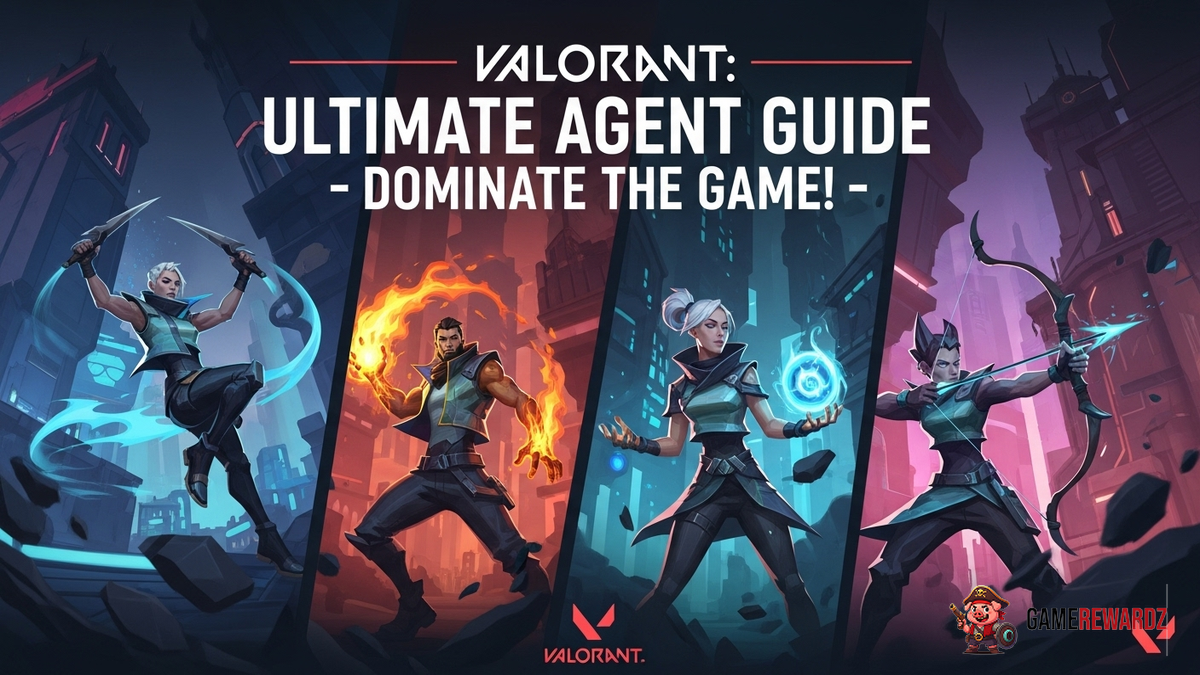
Valorant cleverly divides its agent roster into roles: Duelists, Initiators, Controllers, and Sentinels. Now, you might be thinking, "Okay, I get it. Duelists frag, Sentinels defend." And while that's true on the surface, the nuances are where things get interesting. Think of it like this: each role offers a different way to influence the round. Duelists are your entry fraggers, the tip of the spear. Initiators set up those engagements, flashing enemies and clearing corners. Controllers shape the battlefield with smokes and walls, dictating where the fight happens. And Sentinels? Well, they're the anchors, holding down sites and providing crucial intel.
Choosing the right role—and, more importantly, the right agent within that role—depends on your playstyle and your team's composition. Do you love being aggressive and taking risks? Duelist might be your calling. Prefer a more supportive role, setting up your team for success? Initiator or Controller could be a better fit. Want to be the unmovable object, locking down sites and frustrating the enemy advance? Sentinel it is! I remember when I first started playing, I bounced between roles, trying to find what clicked. Don't be afraid to experiment! You might surprise yourself.
Deep Dive: A Few Standout Agents
Listing every agent and their abilities would make this guide longer than a Tolkien novel. Instead, let's focus on a few standout agents in each role and discuss why they're so effective. Here's the thing: an agent's pick rate doesn't always equate to how powerful they are. It's about how well they synergize with your team, your play style, and the map you're playing on.
Jett (Duelist): The queen of aggression. Her mobility is unmatched, allowing her to dash into site, secure a quick kill, and escape before the enemy can react. Learn to master her Updraft and Tailwind, and you'll be a nightmare for defenders. Her ultimate, Blade Storm, can single-handedly win rounds if used correctly. This is why people like to play her. Oh yeah, video game cases are sometimes empty, you might not see her because she dashed away already!
Breach (Initiator): Breach is all about disrupting the enemy's defenses. His Fault Line and Flashpoint can clear corners and force enemies out of position. His ultimate, Rolling Thunder, is devastating when used to push onto a site. However, he requires good communication with his team to be truly effective. A well-timed Breach ult can completely decimate a defending team. This is how you become a team player!
Omen (Controller): Omen is a versatile controller who can smoke off chokepoints, teleport behind enemy lines, and blind opponents with his Paranoia. His ultimate, From the Shadows, allows him to teleport anywhere on the map, providing valuable intel and creating opportunities for flanks. Omen is a great pick if you want to control the flow of the game and keep your opponents guessing. I've got to admit, the mind games this agents allows fascinate me. Grounded development had a similar effect on me, it kept me guessing, and wanting to know what was next.
Killjoy (Sentinel): The master of area denial. Her Turret and Nanoswarms can lock down sites and prevent the enemy from pushing. Her ultimate, Lockdown, forces enemies out of an area, allowing your team to take control. Killjoy is a must-pick on defense, especially on maps with tight chokepoints. If you like locking things down, she is your gal.
Strategic Team Compositions: Building a Winning Formula
Agent selection is only half the battle. You also need to consider your team's composition. A team full of Duelists might be fun, but it's unlikely to be successful in the long run. You need a balance of roles to cover all your bases. A common composition includes two Duelists, one Initiator, one Controller, and one Sentinel. But don't be afraid to experiment! Some maps favor different compositions. For example, on a map like Bind, with its tight corridors and multiple teleporters, a double Controller composition can be very effective. Remember, adaptability is key. What works one game might not work the next. Be ready to switch agents and strategies on the fly.
And by the way, don't underestimate the power of communication. Even the best team composition will fail if your team isn't communicating effectively. Call out enemy positions, coordinate your abilities, and work together to achieve your goals. It sounds simple, but it's often the difference between victory and defeat.
Valorant: Ultimate Agent Guide - FAQ
How do I know if I'm playing the right agent role?
Experimentation is key! Try out different agents and roles to see what feels most natural to you. Do you prefer aggressive playstyles, setting up plays, controlling the map, or locking down areas? Your preference will guide you toward the role that suits you best. Don't be afraid to step outside your comfort zone, either. You might discover a hidden talent for a role you never considered before.
Why is team composition so important in Valorant?
A balanced team composition ensures that you have all your bases covered. You need agents who can frag, initiate, control, and defend. Without a proper balance, you'll be vulnerable to certain strategies and unable to effectively counter your opponents. Think of it as building a well-rounded sports team - you need a mix of offensive and defensive players to be successful.
What's the most common misconception about Valorant agents?
The most common misconception is that some agents are inherently “better” than others. Every agent has strengths and weaknesses, and their effectiveness depends on the player's skill, the team composition, and the map. A well-played agent with a seemingly “weak” kit can often outperform a poorly played agent with a supposedly “strong” kit. It's all about understanding the agent's strengths and playing to them.
How often should I switch agents in Valorant?
There's no hard and fast rule, but adaptability is important. If your current agent isn't working well with your team or against the enemy composition, don't be afraid to switch. Also, consider the map you're playing on. Some agents are better suited to certain maps than others. Ultimately, the decision to switch agents should be based on your team's needs and the specific circumstances of the game. I recommend playing other hot games to get a feel for the controls.
So, there you have it. Your journey to Valorant domination starts here. Now go forth, experiment, practice, and most importantly, have fun! And remember, even the best players have bad days. Don't get discouraged by losses. Learn from your mistakes and keep grinding. You'll be climbing those ranks in no time.











![Peggle [FLASH] Game](https://gamerewardz.com/thumbs/peggle-flash-game_2.webp)