


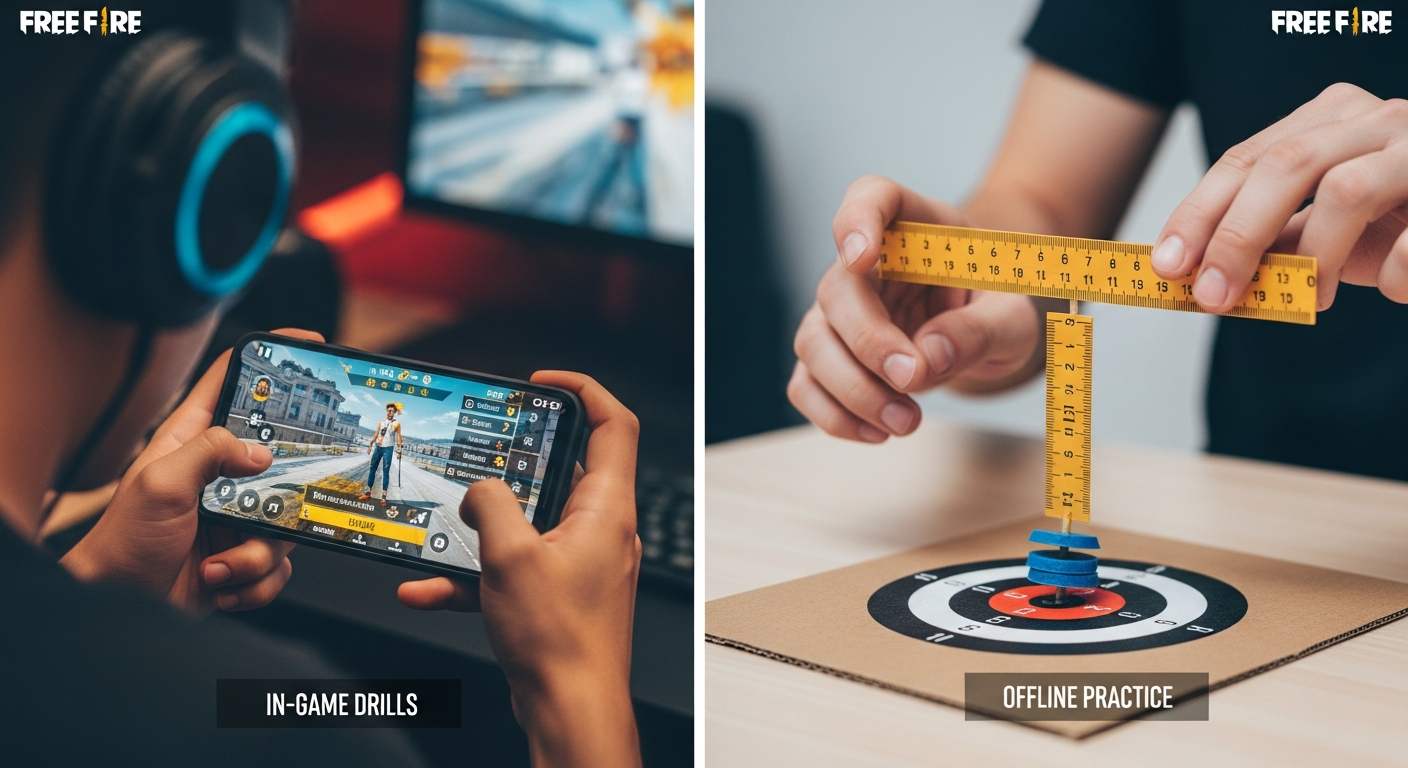
Okay, let's talk reflexes in Free Fire Ranked. Sounds straightforward, right? Train your reflexes, get better, climb the ranks. But here's the thing: it’s so much more nuanced than that. It's not just about twitch reactions (though those definitely help). It's about anticipation, prediction, and yes, a little bit of luck. But let's focus on the stuff you can actually control, shall we?
Understanding the Reflex Landscape in Free Fire
What do I mean by the “reflex landscape?” Good question! I mean that reflexes aren’t some monolithic skill. They’re a combination of a few different things, working in concert. There’s your raw reaction time – how quickly you respond to a visual or auditory cue. Then there's decision-making speed – how fast you can process information and choose the right action. And finally, there's motor skill – how efficiently you can execute that action. See? Complex.
And the frustrating thing about this topic is that different situations require different blends of these skills. A close-quarters firefight demands lightning-fast reaction time and precise motor skills. But trying to anticipate where an enemy sniper will appear requires more decision-making speed and a little bit of predictive ability. So, how do you train all of these? That's the million-dollar question, isn't it?
Training Drills for Lightning Reflexes
Let's get into some actual drills you can do. Forget endless hours in the training grounds just shooting at static targets. That's practically useless. We need dynamic, unpredictable scenarios.
- The “Peek-a-Boo” Drill: Grab a friend. One of you peeks around a corner and shoots; the other reacts. Switch roles. Focus on minimizing the time between seeing the enemy and firing. Start slow and gradually increase the speed. It helps to use voice comms – a sudden shout can simulate the pressure of a real firefight.
- The Grenade Dodge: This one’s a little trickier. Have your friend throw grenades at you (obviously, in a safe training area). The goal isn't to avoid the grenade entirely – that's often impossible. It’s to react quickly and move to minimize the damage. This trains your ability to assess threats and react under pressure.
- The Sound Hound Drill: Close your eyes and have your friend move around you, making noise. Try to pinpoint their location based on sound alone and react accordingly. This is crucial for those moments when you're caught off guard or ambushed.
But, here's the kicker: these drills are only effective if you're actively focusing on improving. Don't just go through the motions. Analyze your mistakes, identify your weaknesses, and adjust your training accordingly. Record yourself. I can't tell you how helpful it is to see your gameplay from another perspective.
Beyond the Drills: Mindset and Anticipation
This is where things get really interesting. Reflexes aren't just about physical speed; they're about mental speed, too. Like knowing the map, understanding common player tendencies, and anticipating enemy movements. A good player reacts to what's happening. A great player predicts what's going to happen.
How do you develop this predictive ability? Experience. Plain and simple. The more you play, the more patterns you'll recognize. You'll start to anticipate enemy rotations, predict grenade throws, and even anticipate when an enemy is likely to reload. Pay attention to the kill feed, too. That gives you invaluable information about enemy locations and engagements.
Actually, that's not quite right. Experience helps, but you need to be actively analyzing your experiences. Review your gameplay. Watch pro players. Study map layouts. The goal is to internalize as much information as possible so you can make faster, more accurate decisions in the heat of battle. Speaking of pro players, you should check out their settings as pro Fortnite settings to see the best way to optimize your response time.
Optimizing Your Setup for Peak Performance
This is the unglamorous but essential part. Your hardware and software settings can have a significant impact on your reflexes. We're talking about things like:
- Device Settings: Make sure your device is running smoothly and that your graphics settings are optimized for performance, not just eye candy. Higher frame rates mean lower input lag, which means faster reactions.
- Control Scheme: Find a control scheme that works for you. Experiment with different layouts and sensitivities until you find something that feels natural and responsive. There are tons of guides online that can help you optimize your settings. But don't just copy someone else's setup blindly. Experiment and find what suits your playstyle.
- Ping: This is the bane of every online gamer's existence. High ping means lag, which means delayed reactions. Do everything you can to minimize your ping, whether it's switching to a wired connection, closing background applications, or upgrading your internet service. You can test your internet speed on sites like Speedtest.net.
Let me try to explain this more clearly: your goal is to eliminate anything that might be slowing you down. Every millisecond counts. Optimize everything.
FAQ: Reflex Training in Free Fire
How do I know if my reflexes are actually improving?
This is a tough one because it's hard to quantify reflexes directly. The best way is to track your in-game performance over time. Are you winning more gunfights? Are you reacting to threats more quickly? Are you climbing the ranks? If the answer is yes, then you're probably improving. But don't rely solely on stats. Pay attention to how you feel. Are you feeling more confident and in control? That's a good sign, too.
Why do some players seem to have superhuman reflexes?
It's tempting to attribute it to natural talent, and that might play a small role. But most of the time, it's a combination of factors: practice, experience, optimized settings, and yes, maybe a little bit of good luck. Don't get discouraged by players who seem impossibly fast. Focus on improving yourself and you'll be surprised at how much you can achieve.
Is it possible to train reflexes too much?
Yes, absolutely. Overtraining can lead to fatigue, burnout, and even decreased performance. It's important to take breaks and give your brain and body time to recover. Listen to your body. If you're feeling tired or stressed, take a day off. And don't forget to vary your training. Doing the same drills over and over again can lead to boredom and plateaus. Mix things up to keep your training fresh and engaging.
What's the biggest mistake players make when trying to improve their reflexes?
The biggest mistake, in my opinion, is focusing solely on reaction time and neglecting the other components of reflexes. Remember, it's not just about how quickly you react; it's about how quickly you process information and choose the right action. Work on developing your decision-making skills, your map awareness, and your game sense. Those are just as important as raw reaction time.
So, there you have it. A slightly rambling, hopefully helpful guide to reflex training in Free Fire Ranked. Remember, it's a journey, not a destination. Keep practicing, keep learning, and keep pushing yourself. And who knows? Maybe one day, you'll be the one with the superhuman reflexes that everyone else is envious of.



![Peggle [FLASH] Game](https://gamerewardz.com/thumbs/peggle-flash-game_2.webp)